Last updated November 18, 2026







Free written scope consultation - allowances, timeline, and change-order rules on paper before a single trade is scheduled
DIY vs Professional Bathroom Remodeling: What’s Safe to Do Yourself
The cheapest bathroom DIY mistake we’ve seen in Miami Beach wasn’t a crooked tile cut or a leaky supply line. It was a condo association fine for unpermitted work, followed by a mandatory licensed contractor hired to undo and redo what the homeowner had already paid to do themselves. The homeowner saved nothing. The building required sign-off. The work came out anyway. That sequence plays out more often than most guides admit, because most guides are written for a house with a yard, not for a mid-rise on Collins or a 1970s co-op off Alton Road. This guide draws a real line down the middle: which tasks are genuinely safe to do yourself, which ones trigger a permit, which ones a condo board won’t let you touch, and where a hybrid approach saves the most money without betting your subfloor on it.
Quick Answer
In Miami Beach, you can safely DIY painting, vanity hardware, a mirror swap, and replacing a light fixture on existing wiring. You should not DIY anything that moves a drain, adds a circuit, or rebuilds a shower pan. Those tasks require a permit in Miami-Dade and, in most condo buildings, a licensed, insured contractor with building management sign-off. The middle ground – a licensed plumber and tile setter for the technical work, with you handling demo and finishes – is usually the best dollar-for-dollar choice.
Key Takeaways
- Replacing a toilet is a fixture swap. Moving the drain under it is a permitted plumbing alteration.
- Cosmetic changes still need building management sign-off in most Miami Beach condos.
- Shower waterproofing and tile setting are the two most expensive DIY failures to reverse.
- Association rules on work hours, elevator padding, and debris disposal quietly eat your savings.
- A written scope for every trade – even the ones you hire for half a day – keeps the job on track.
Styles & brands we work with
- Kitchen remodeling
- Bathroom remodeling
- Home additions & ADU
- Roofing
- Windows & doors
- Driveway & pavers
- Fence
Table of Contents
- What Miami-Dade Requires a Permit For (and What It Doesn’t)
- The Tasks That Are Genuinely Safe to Do Yourself
- Why Waterproofing and Tile Setting Are the Costliest DIY Failures
- How Miami Beach Condo Rules Reshape the DIY Math
- The Hybrid Approach: Licensed Trades, Owner Finishes
- Miami Beach Climate and Why It Changes Bathroom Materials
- What Each Path Actually Costs in Miami Beach
- How to Vet the Contractor You Do Hire
What Miami-Dade Requires a Permit For (and What It Doesn’t)
Miami-Dade County and the City of Miami Beach draw a fairly clear line between a cosmetic refresh and a construction project, and it’s the construction side of that line where permits come in. The general rule: anything that touches the plumbing system, the electrical system, or the structural framing requires a permit and an inspection. Anything that’s surface-level usually doesn’t.
Here’s the line-item breakdown homeowners ask us about most often:
- Replacing a toilet (same location, same drain): No permit. It’s a fixture swap on existing plumbing.
- Moving a toilet to a new location: Permit required. It involves relocating the drain line under the floor.
- Swapping a vanity faucet: No permit. Same supply lines, same drain.
- Moving the vanity to a new wall or adding a sink: Permit required. New drain and supply rough-in.
- Replacing a light fixture on existing wiring: No permit in most cases. Same box, same circuit.
- Adding a circuit, a GFCI outlet, or moving a switch: Permit required. It’s a change to the electrical system.
- Replacing shower tile over existing waterproofing: Typically no permit if the pan and membrane aren’t disturbed.
- Rebuilding a shower pan or re-waterproofing: Permit required. This is where the inspector looks at the membrane and the slope.
- Replacing a bathtub with a shower (or vice versa): Permit required. Drain relocation, valve work, and waterproofing all overlap.
- Knocking out a wall or widening a doorway: Permit required. Load-bearing questions are critical in older Miami Beach buildings, many of which have block walls with specific load paths.
One detail that trips people up: an unpermitted drain move isn’t just a code problem at sale. In Miami Beach condos, it’s usually a violation of your governing documents, which gives the association the right to order it reversed – at your cost, on a timeline you don’t set. Before you decide, pull your association’s alteration rules. Most are available from building management and take a phone call or an email to get.
The Tasks That Are Genuinely Safe to Do Yourself
There’s real money to save in the first 20 percent of a bathroom project, and almost none of it is in the trades. Here are the tasks we’ve seen homeowners handle without injury, without inspection headaches, and without undoing a licensed trade’s work.
- Painting walls and trim. The safest DIY task there is. In Miami Beach’s humid air, use a bath-rated paint with a mold-resistant additive and a semi-gloss or satin finish on walls. Primer matters more than the topcoat here – most of the streakiness homeowners blame on paint is really a primer skipping.
- Vanity hardware and pulls. Swapping cabinet pulls is a screwdriver job. Measure the existing bore spacing before you buy, or you’ll be filling holes and repainting.
- Mirror swap. If you’re replacing a wall-hung mirror with a mirror of similar weight and you’re anchoring to studs or masonry, this is a homeowner job in most cases. A heavy new mirror on drywall alone isn’t – it needs proper anchors or blocking.
- Light fixture replacement on existing wiring. Same box, same switch, same circuit. Turn the breaker off at the panel, test the wires, and photograph the connections before disconnecting anything. If you find aluminum wiring, cloth-wrapped wiring, or a box that’s been hacked into, stop and call an electrician.
- Demo and haul-away prep. Pulling a dated vanity, disconnecting a surface-level handle or mirror frame, and staging debris is labor you can do. Licensed trades often charge $400-$900 just for demo they don’t want to do – skip that line item if you’re comfortable with a crowbar.
The honest limit: anything that touches water, electricity beyond a fixture swap, or the waterproofing envelope behind the tile is not a homeowner task in a building with neighbors below you. If water or current is involved, bring in the trade. The good news is that on a typical Miami Beach bathroom, those tasks are 30-40 percent of the labor, not 100 percent.
Why Waterproofing and Tile Setting Are the Costliest DIY Failures
If you’re going to splurge on a professional anywhere in a bathroom project, this is where. Waterproofing failure is the single most expensive DIY outcome we see, and the cost lands months after the tile looks fine.
Here’s the mechanism, plain. Behind your tile is a substrate – the layer of cement board or foam board that carries the tile and holds the waterproof membrane. In a properly built shower, that system is sloped to the drain, sealed at the seams and corners, and banded where the wall meets the floor. It’s a system, not a sheet. When it’s installed wrong – a corner left unbanded, a nail through the membrane, a pan that doesn’t slope – water seeps behind the tile, sits on the substrate, and slowly wicks into the framing and the floor beneath.
The tile looks perfect for months. Then:
- Grout lines darken and won’t clean.
- A faint musty smell appears that no amount of scrubbing fixes.
- The neighbor below you notices a stain on their ceiling – which in a Miami Beach condo is the call you don’t want to get.
Reversing a failed shower pan means tearing out the tile, the substrate, and likely some of the framing, then starting over. In our experience that’s $6,500-$14,000 to fix what was a $2,000 install. Tile setting has a similar failure curve: a poorly laid tile over an unlevel substrate leads to lippage, cracked grout, and hollow-sounding tiles – and repair means the same full tear-out.
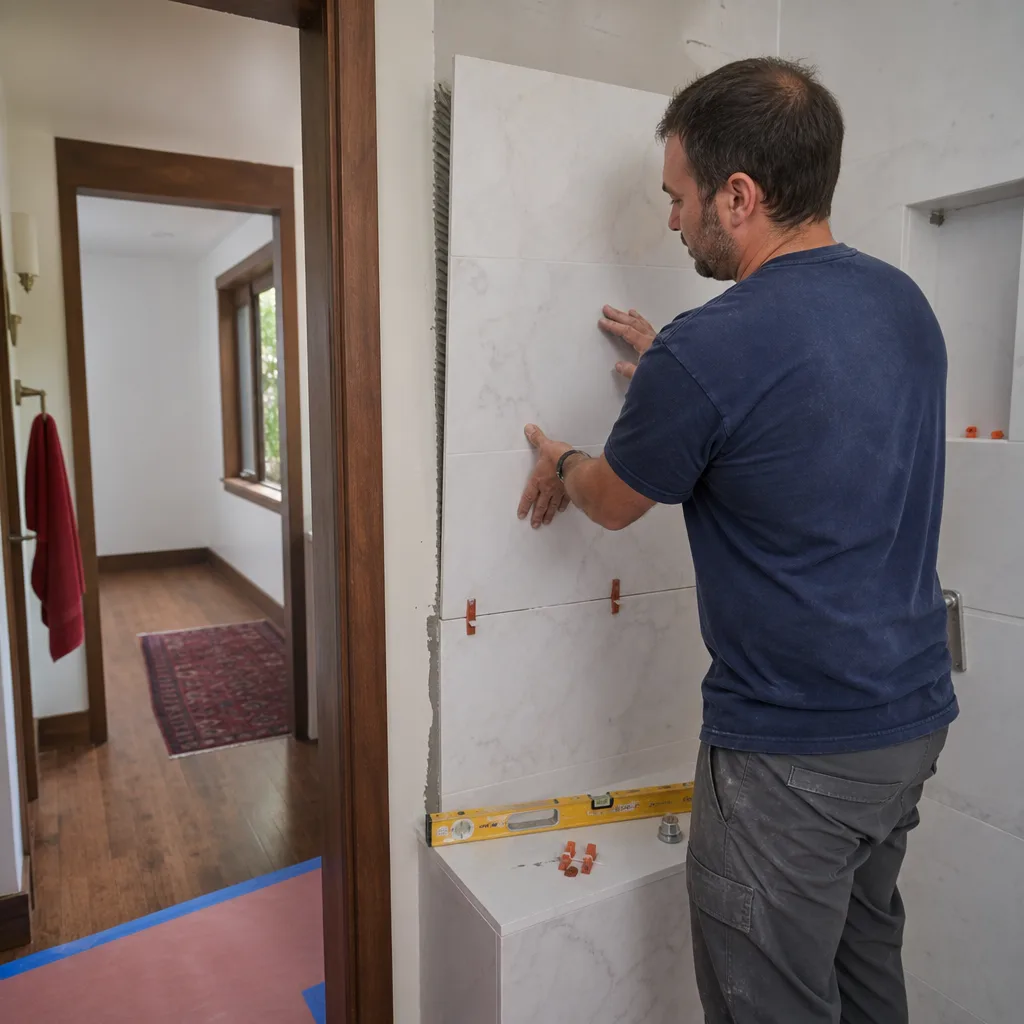
So the safe division of labor is: you can set tile in a low-risk area like a dry, non-shower wall, but the shower pan and any slope-critical surface should be done by a tile setter who waterproofs to membrane manufacturer spec. If you don’t know the vocabulary of bonding flanges, pre-slope, and flood testing, that’s the signal – hire it out and put your DIY hours somewhere else.
How Miami Beach Condo Rules Reshape the DIY Math
This is the piece most online guides skip, and it’s usually bigger than the permit question. In a Miami Beach condo building, even cosmetic work you’re legally allowed to do as a homeowner may still require building management sign-off, because the association’s governing documents govern more than county code does.
The rules that bite:
- Work hours and noise windows. Many buildings restrict construction noise to weekday hours, often something like 9am to 5pm, and shut down weekends entirely. A DIY project you planned for a Saturday is a violation if it involves hammering or cutting.
- Elevator use. Moving materials and hauling debris requires elevator reservations and padding. Buildings commonly charge a refundable deposit that runs several hundred dollars, and some impose non-refundable fees for the reservation itself.
- Debris disposal. Construction debris typically can’t ride the building’s trash chute or sit in the regular dumpster. It’s a scheduled bulk pickup or a dumpster placement, often coordinated with building management. In South Beach and Mid-Beach, dumpster placement on a tight street can require a city permit of its own.
- Licensed and insured contractor requirement. Many buildings require that any contractor working in the unit submit a certificate of insurance naming the association, sign a work agreement, and use the freight elevator. Your handyman brother-in-law doesn’t pass that bar. Neither does an unlicensed DIY helper you planned to hire.
- Water shutoff coordination. If you’re touching plumbing, the building may require a valve shutoff scheduled with management. That’s a call and a wait, sometimes days.
- Alteration approval. Most associations require a written alteration request before work starts, with a scope, contractor insurance, and sometimes a deposit. Approval can take one to three weeks.
The takeaway: in a Miami Beach condo, the “hidden” cost of DIY isn’t the tool rental – it’s the fines, the timeline slip while you wait for board approval, and the mandatory redo if you skip sign-off. If you’re in a single-family home on the Venetian Islands or in a townhome in Surfside, you sidestep most of this, but you inherit county inspection timelines instead.
The Hybrid Approach: Licensed Trades, Owner Finishes
The hybrid model captures most of the savings and almost none of the risk. The idea: you act as your own general contractor for the finish work, and you hire licensed trades for anything that touches water, electrical, or the waterproofing envelope. It works well in Miami Beach, where the trades are competitive and a small job can usually get scheduled within a couple of weeks when you scope it tightly.
Here’s the split we recommend:
- You handle demo. Pull the old vanity, mirror, and accessories. Have a dumpster or bulk pickup arranged first – not after the pile is on your floor.
- You hire a licensed plumber for rough-in. Moving a drain, adding a vanity, replacing a valve. Get a written scope: what they’re doing, what they’re not doing, and whether they’re pulling the permit or you are. In most cases the plumber pulls the permit; confirm it.
- You hire a tile setter for the shower and floor. Get a written scope that names the membrane system and the substrate. Flood test before tile. That’s non-negotiable and it should be in the scope.
- You hire an electrician for any circuit work. If you’re adding a fan, a GFCI, or moving a switch, licensed. If you’re just swapping the fixture, do it yourself.
- You handle finish work. Paint, hardware, mirror, accessories, caulk. This is where you get the real DIY payoff, usually a few thousand dollars on a mid-range job.
- You write the scope for each trade. Even if it’s a single-day job, get it in writing: what’s included, what the price is, and what the payment schedule looks like. Verbal scope is where hybrid projects unravel.
The written scope matters most on the seams – where the plumber stops and the tile setter begins. Vague responsibility is how showers get built without a flood test and how a plumber and a tile setter both say “that wasn’t my side.” One paragraph per trade solves it. If you’d rather hand off general contracting too, our team at Penhallow Remodeling as your general contractor in Miami Beach can carry the whole scope, including the permit and the inspections.
Miami Beach Climate and Why It Changes Bathroom Materials
Miami Beach humidity runs high year-round, and the salt air in neighborhoods like North Beach and Mid-Beach adds another corrosive vector. That affects material choice and it affects how fast a DIY shortcut fails.
- Subfloor in older homes. Plenty of pre-1980 Miami Beach homes have plywood or OSB subfloor that has already seen moisture at least once. Before you lay tile on a DIY floor, confirm the subfloor is dry and sound. A moisture meter costs less than a box of tile and will save you the redo.
- Framing and block walls. Many Miami Beach buildings use concrete block with furring strips. That changes how you hang a mirror, a vanity, or a wall cabinet – you’re anchoring to masonry, not finding studs. Masonry anchors are cheap and reliable; drywall toggles in a block wall aren’t.
- Ventilation is non-negotiable. A bath fan rated for the square footage and venting to the exterior is not optional in this humidity. If your fan vents into the attic or stops at the ceiling drywall, mold is a matter of time, not probability. This is a licensed electrician job if a new circuit or roof penetration is required.
- Finish materials. Porcelain tile over ceramic, sealed natural stone if you use it at all, and quality exterior-rated trim on window-adjacent walls. Windows near the shower or over the tub – common in Miami Beach units – need impact-rated glass in most of the county, and the leading brands here are PGT and CGI. If your bathroom remodel touches a window, that’s a window-replacement decision, not a siding decision.
- Paint and caulk. Bath-rated paint, mold-resistant caulk, and a full cure before you use the shower. Cutting that cure short is how DIY caulk fails in a month.
When we plan a bathroom in Miami Beach, we’re planning against the humidity as much as against the homeowner’s daily routine. You should be doing the same math even if you’re doing half the work yourself.
What Each Path Actually Costs in Miami Beach
Here are real ranges. These are what we see in Miami Beach for a standard hall bath or guest bath, roughly 40 to 60 square feet, keeping the existing footprint. Larger bathrooms with a tub-to-shower conversion, layout changes, or premium finishes run higher.
- Full DIY (cosmetic only – paint, hardware, mirror, fixture swap): $900-$2,800 in materials. Feasible if the plumbing, electrical, and tile are all staying as-is.
- Hybrid (you demo and finish, professionals handle plumbing and shower tile): $12,000-$22,000 total. This is the sweet spot for most homeowners.
- Full professional remodel (turnkey, permits, inspections, materials): $18,000-$38,000 depending on finish level and any layout change. Cambria or Silestone vanity tops, Kohler or Moen fixtures, and a full shower rebuild sit at the top of that range.
- Condo fees and logistics you should budget separately: $200-$800 for elevator reservation, padding, and debris logistics; $0-$500 for alteration-request processing in some buildings.
- Failed DIY shower pan remediation: $6,500-$14,000, plus the cost of whatever was under it that now needs replacing.
Notice the line that makes the decision for many homeowners: the failed-DIY remediation is more than the full hybrid project. That’s the math to run before deciding. It’s also why we put a written price before any work starts on every project – not a range, a number you can hold us to – because the biggest complaint we hear about contractors in Miami Beach is the price that changed after demo day.
If you’re ready to see what a professional bathroom remodel runs for your specific bathroom, our bathroom remodeling team in Miami Beach will walk through the layout, the permit list, and the association requirements on a free visit. If your project is bigger – a bathroom plus a kitchen – the kitchen remodeling service in Miami Beach handles that scope too, and we can stage the two so you never lose the only working bathroom for more than the schedule calls for.
How to Vet the Contractor You Do Hire
Whether you hire one trade or five, the vetting is the same. Use this as a checklist on every phone call.
- Ask for the written price before you ask for the start date. A verbal range is a placeholder. The number you sign is the number that holds.
- Confirm the license and insurance in writing. Ask for a certificate of insurance that names the association if you’re in a condo. Any contractor who hesitates on this is a pass.
- Ask about background checks and uniforms. The contractor you hire sends people into your home. You should know who’s walking in.
- Ask what the guarantee actually covers and for how long. “We stand behind our work” is not a guarantee. A written document with a stated period is.
- Ask who pulls the permit. Get it in writing. The permit and the inspection are the building department’s proof the work was done to code, and that document is yours.
- Ask how they handle a failed repair. A clear answer – a free return visit, no re-inspection charge – is how you know the guarantee is real.
- Ask for a defined arrival window. “Sometime Tuesday” is not a window. A real contractor gives you a range and a call when they’re on the way.
We put all seven of these in writing on every project through the 365-Day Done Right Promise – if it’s not done right, we come back and make it right, at no charge. It’s the Kingswell standard we’ve built on: say the price before the work, show up in the window we gave, leave the place cleaner than we found it. Our technicians have up to 22 years of experience, and they arrive background-checked and uniformed. You can read more about how we run the whole business on our Penhallow Remodeling Miami Beach home page.
Common Mistakes to Avoid
- Starting demo before the scope is in writing. Demo is irreversible. If you rip out a shower pan and only then discover the association requires an approved contractor, you’re paying twice.
- Assuming “it’s allowed” means “it’s approved.” Miami-Dade code and your condo’s alteration rules are different documents. Both apply.
- DIY-ing the shower waterproofing to save $2,000. A failed pan costs $6,500-$14,000 to fix, plus a neighbor’s ceiling repair. The savings never cover it.
- Using drywall in the shower surround. Moisture-resistant drywall is for dry areas. In a Miami Beach shower, it’s a countdown. Use a proper tile backer board and follow the membrane manufacturer’s spec.
- Skipping the flood test. A pan that holds water at the drain for the test period is a pan you can trust. Skipping it is how the neighbor below you learns about your project.
- Buying a vanity before you measure the doorways. Miami Beach condo halls and elevator doors are narrower than they look. We’ve seen more than one homeowner discover this with a 60-inch vanity halfway down the corridor.
- Forgetting the elevator reservation. Materials can’t ride the passenger elevator unmoved, and debris can’t sit in the lobby. Both cost money; both cost more if you get it wrong.
- Hiring the lowest bid on plumbing. The plumbing savings from a non-licensed installer evaporate the moment there’s an inspection or a leak. There’s no cheap version of a correctly soldered joint.
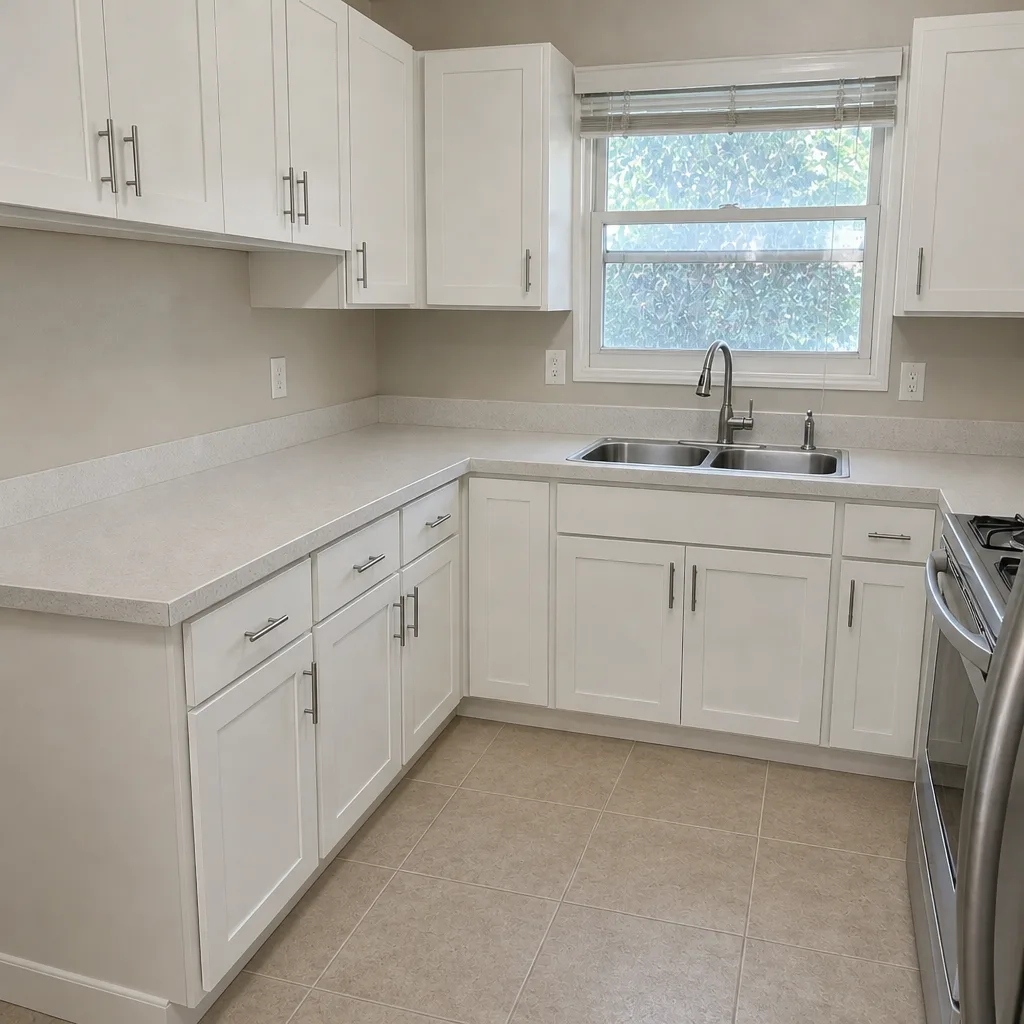
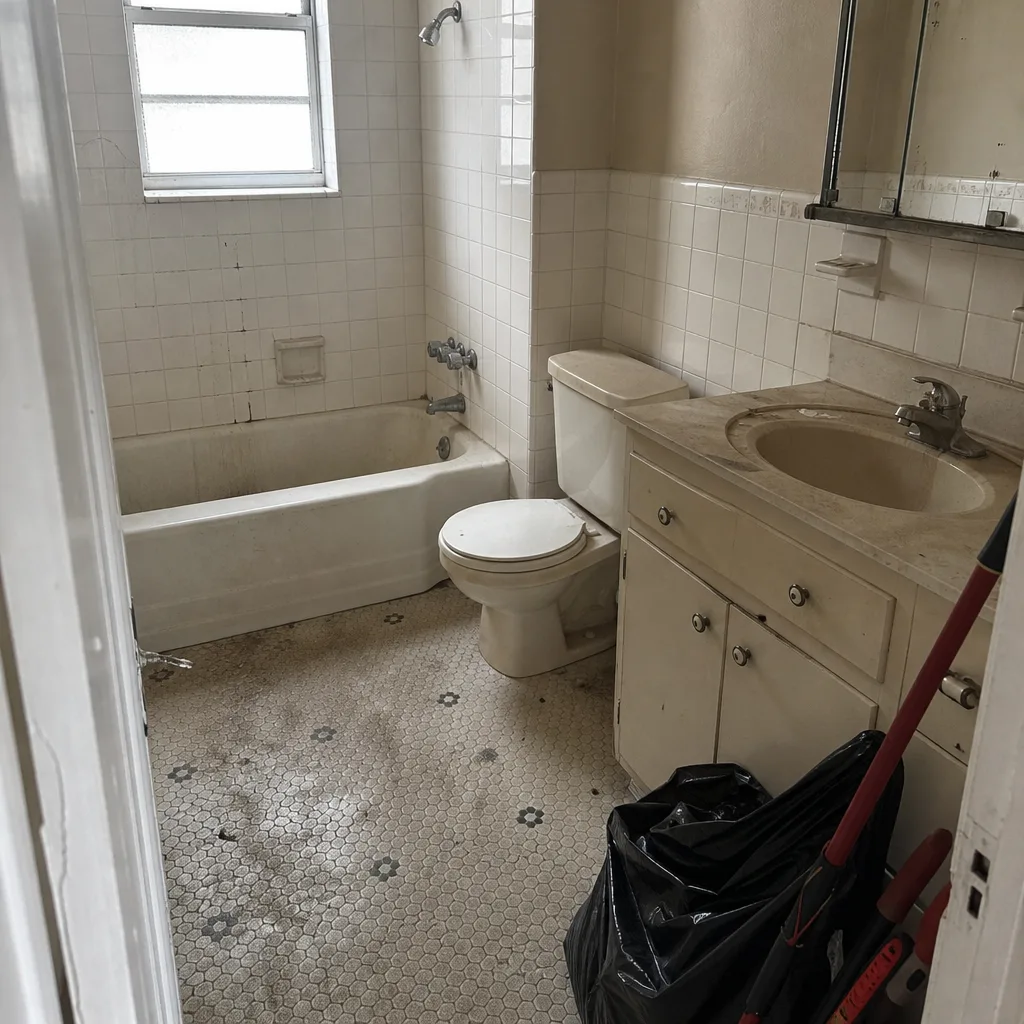
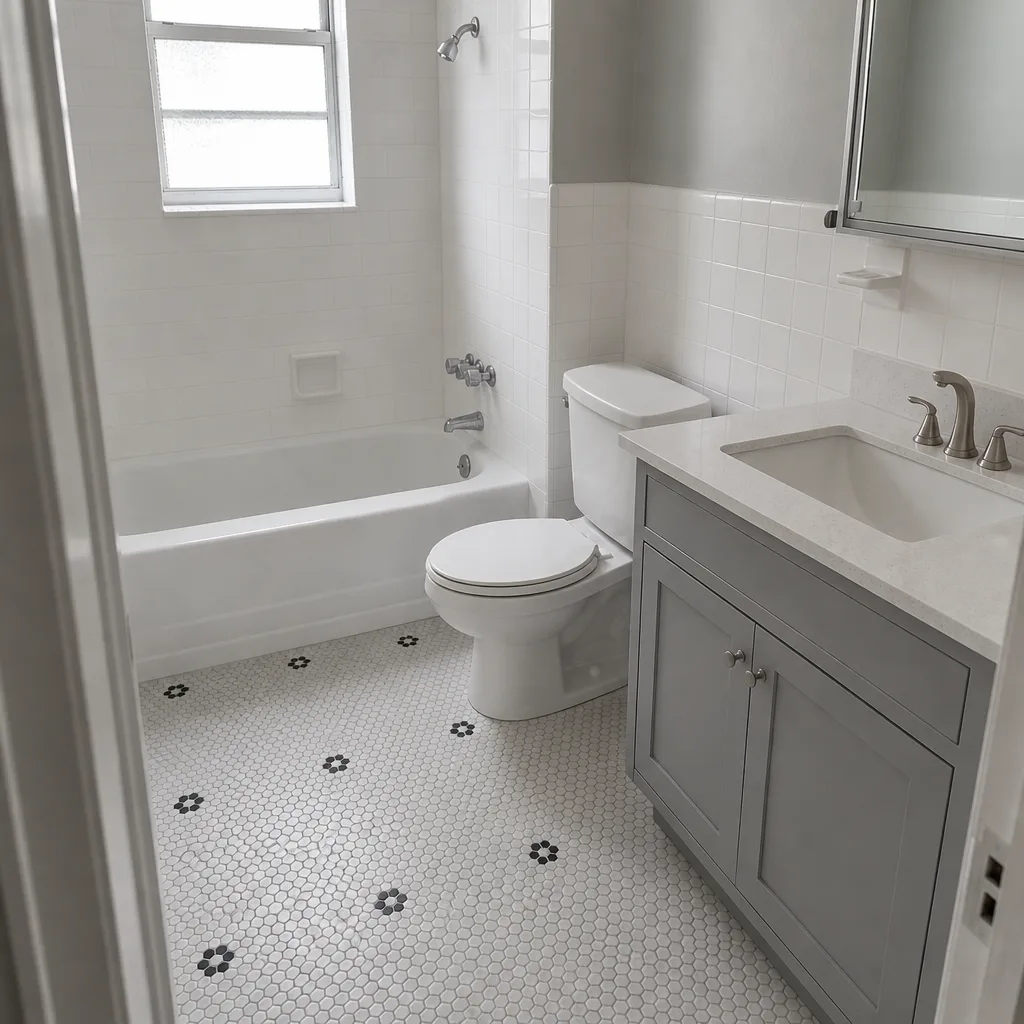
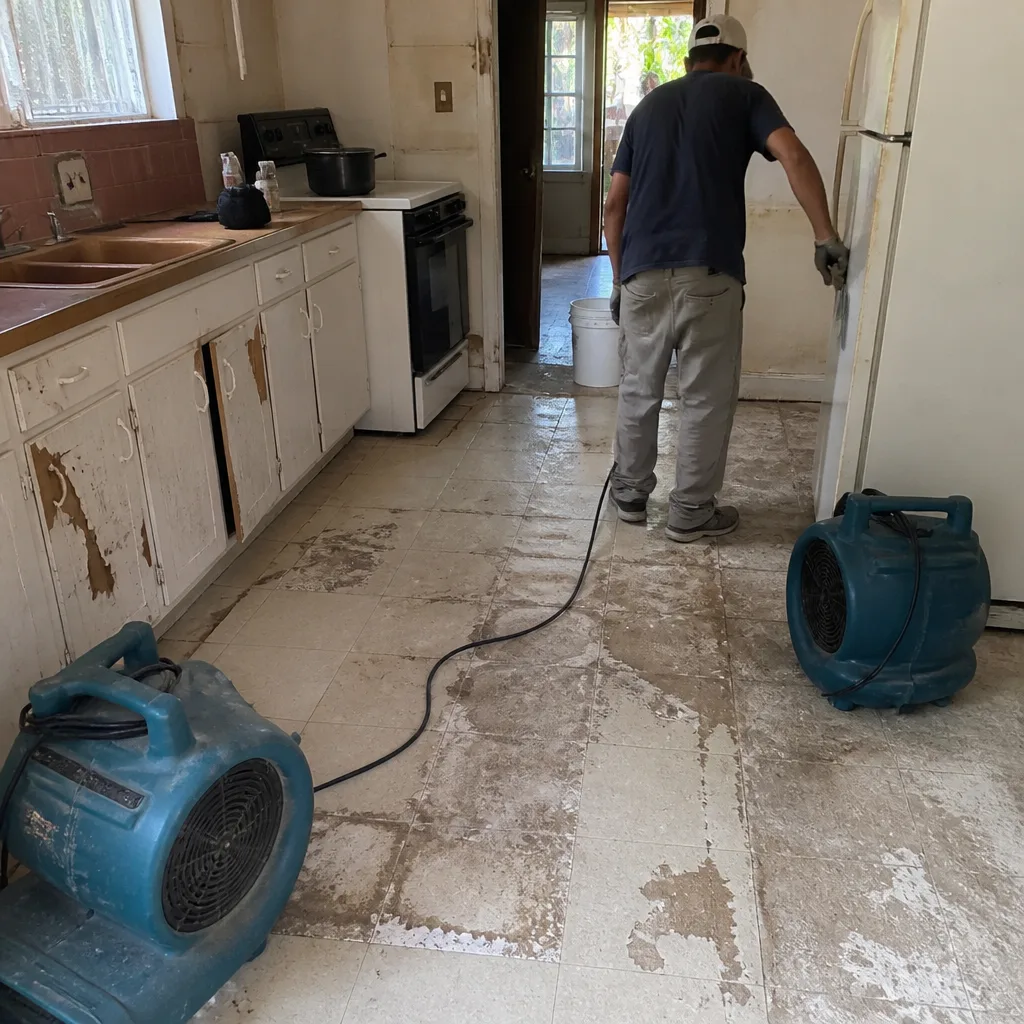
See the difference
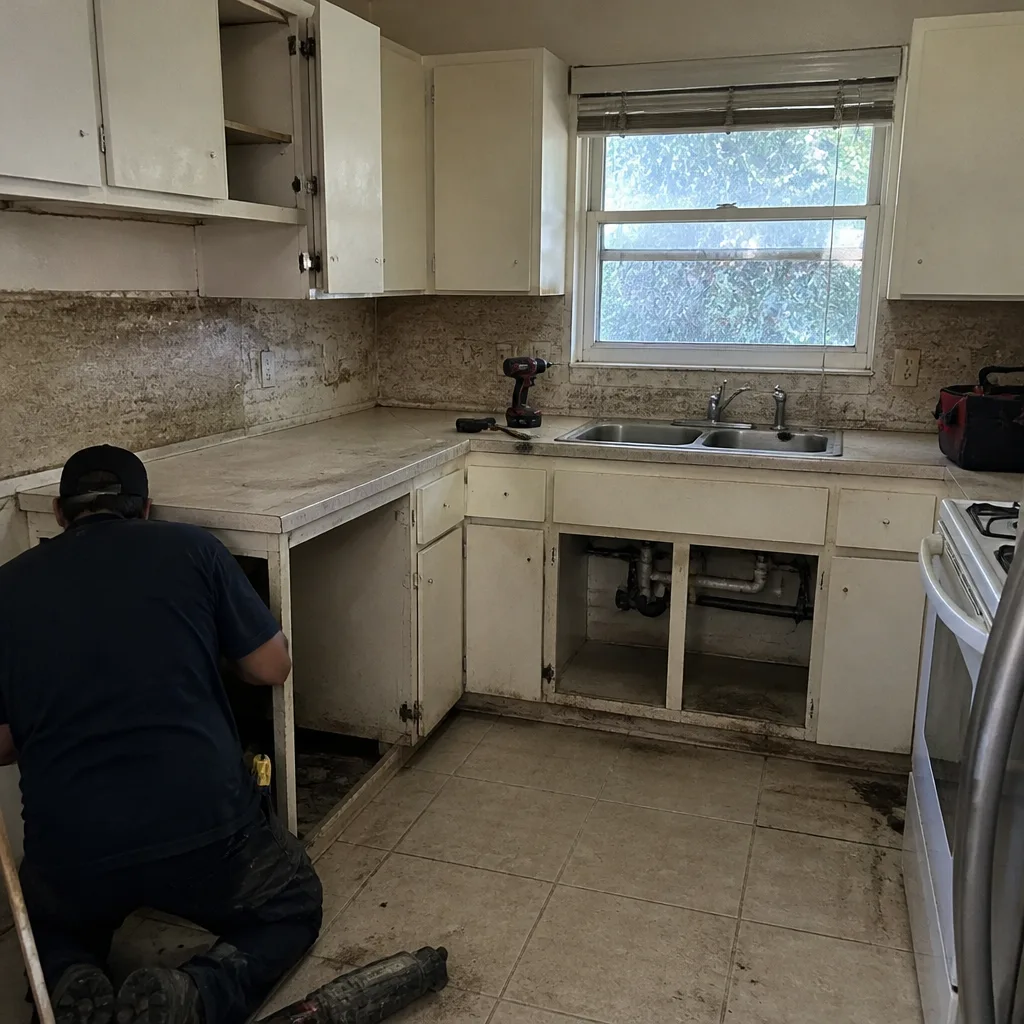 Before
 After
 Before
 After
 Before
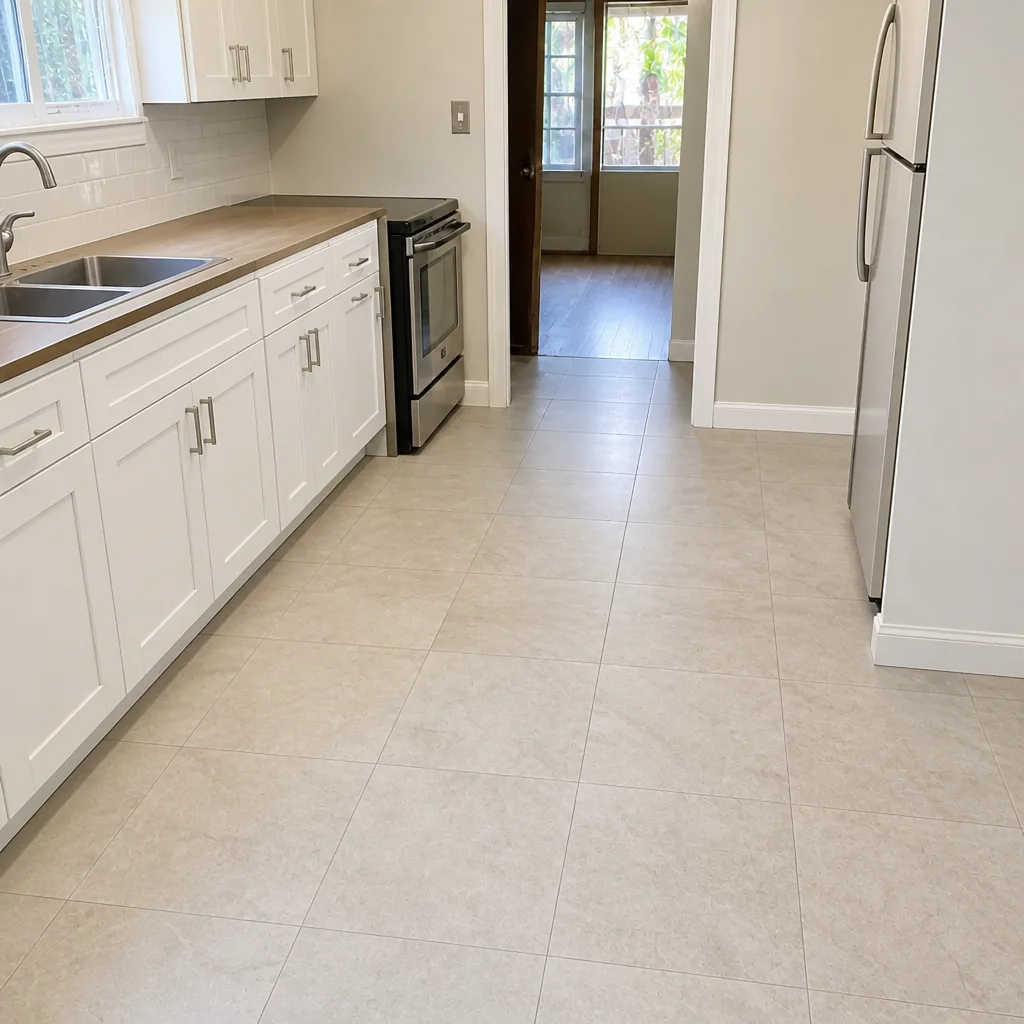 After
When to Call a Professional
Call a professional the moment the work involves water moving, current beyond a fixture swap, or the waterproofing envelope. That includes: moving a drain, adding an outlet or a fan circuit, converting a tub to a shower, rebuilding a shower pan, or tearing out and re-tiling a shower wall. Call us as well if your building requires a licensed, insured contractor for any alteration – that requirement alone usually makes the DIY route more expensive than hiring the trade. And call us if your DIY demo has gotten ahead of your plan; we’ve seen enough half-demolished bathrooms to know that stopping early is cheaper than continuing wrong. Penhallow Remodeling Miami Beach offers free estimates in Miami Beach – call (844) 656-1986 and we’ll walk the bathroom with you, list the permits you need, and put a written price in front of you before anything gets pulled.
Frequently Asked Questions
Yes. Replacing a toilet at the same location, using the same drain and supply line, does not require a permit in Miami-Dade County. Moving the toilet to a different spot does, because that involves relocating the drain under the floor. If you’re in a condo, check your association’s alteration rules first; many buildings require sign-off even for a fixture swap. Call (844) 656-1986 if you want us to look at the plan before you buy the fixture.
It depends on what’s being changed. Cosmetic work like paint, hardware, and a fixture swap on existing wiring and plumbing doesn’t require a permit. Anything that modifies the plumbing system, the electrical system, or the waterproofing and tile in a shower does. Replacing tile over an intact shower pan typically doesn’t, but rebuilding the pan does. Our team pulls the permit and manages the inspection on every project we take on.
Demo labor typically runs $400-$900 on a standard bathroom, so that’s the realistic savings from handling it yourself. The bigger savings come from doing paint, hardware, and finish work, which can add another $1,500-$2,500 on a mid-range project. The savings disappear fast if you break something that a licensed trade then has to fix – damage to a drain line or a valve during demo is the most common culprit.
Most Miami Beach buildings require your contractor to submit a certificate of insurance naming the association, sign a work agreement, use the freight elevator with padding, and follow building work hours. Approval usually takes one to three weeks, and some buildings require a deposit. We handle the paperwork on our side for every job we run. Call (844) 656-1986 and we’ll tell you exactly what your building will ask for.
A failed shower pan is the most expensive, at $6,500-$14,000 to remediate, because the fix requires tearing out the tile, the substrate, and often the framing beneath. It’s also the hardest to detect early, since the tile looks fine while water is seeping behind it. The next most expensive is an unpermitted drain move, which can trigger an association-mandated redo in addition to the plumber’s fee.
Often, yes, because the permit and association requirements create more overhead than the actual square footage suggests. A 40-square-foot bathroom in a Miami Beach condo still needs building sign-off, elevator reservations, debris coordination, and licensed trades. A turnkey professional remodel runs $18,000-$38,000 depending on finish level, and the hybrid route with you doing finishes lands around $12,000-$22,000. We give you a written price before we start, so the number you see is the number on the invoice.
The Bottom Line
The DIY-vs-professional decision in Miami Beach comes down to three lines you draw yourself. Anything cosmetic – paint, hardware, mirror, a fixture swap on existing wiring – is a good DIY job and saves real money. Anything that moves water or current, or rebuilds the shower’s waterproofing envelope, belongs to a licensed trade. And in a condo, every line of work still passes through building management, so budget the association’s timeline and fees before you pick up a tool. The hybrid route – licensed plumber and tile setter, homeowner demo and finishes – captures most of the savings with almost none of the risk. If a DIY shortcut would cost more to undo than to do properly, hire the trade. Call (844) 656-1986 for a free estimate and we’ll put the price in writing before any work starts.
Written by the team at Penhallow Remodeling Miami Beach.