Last updated November 18, 2026







Free written scope consultation - allowances, timeline, and change-order rules on paper before a single trade is scheduled
Construction Emergency Preparedness Guide for Miami Beach Homes
After a named storm, Miami Beach licensed contractors are booked 6 – 10 weeks out within 72 hours of landfall. The homeowners who get repaired first aren’t the ones who called fastest. They’re the ones who already had a written relationship with a contractor before the season started. That single difference – paperwork in a drawer versus a panicked scroll through Google at 2 a.m. – decides whose roof gets tarped on day three and whose waits until October. This guide covers the two kinds of construction emergencies that hit Miami Beach homes: the storm-driven kind and the slow-failure kind. You’ll learn how to document your home so a claim actually pays, what a contractor can legally do before permits reopen, and what to put in writing now so you’re not at the back of the queue later.
Quick Answer
Construction emergency preparedness in Miami Beach means three things: photographing and recording your home’s baseline condition before storm season so insurance claims have evidence, knowing the difference between emergency tarping (legal immediately after a declared disaster) and permitted permanent repair, and having a documented relationship with a licensed contractor before June 1 so you move to the front of the post-storm queue. Slow-failure emergencies – roof membrane separation, stucco delamination, slab plumbing leaks – need the same pre-planning, because they escalate quietly and cost far more once water reaches interior finishes.
Styles & brands we work with
- Kitchen remodeling
- Bathroom remodeling
- Home additions & ADU
- Roofing
- Windows & doors
- Driveway & pavers
- Fence
Table of Contents
- Pre-Season Documentation: Recording Your Home’s Baseline Condition
- Emergency Tarping vs. Emergency Repair: What’s Legal After a Disaster
- Slow-Failure Emergencies Unique to Miami Beach
- The Response Order That Minimizes Damage
- What to Put in Writing With a Contractor Before Hurricane Season
- How to Spot Storm-Chaser Contractors After a Miami Beach Event
- Common Mistakes to Avoid
- When to Call a Professional
Pre-Season Documentation: Recording Your Home’s Baseline Condition
Insurance claims are won or lost on evidence, and the evidence has to exist before the damage. A claims adjuster in Miami Beach will ask one question first: what did this look like before? If your answer is a shrug and a phone full of vacation photos, the claim gets negotiated down. If your answer is a dated, organized file that shows the roof was intact and the stucco was sound, you get paid for the damage instead of arguing about what was already there.
Here’s the documentation routine we recommend every Miami Beach homeowner run through each May, before the season turns:
- Walk the exterior on a sunny morning and shoot video, not just stills. Start at the front door and narrate out loud: date, address, what you’re looking at. Walk the full perimeter, then the roof line from the ground with a zoom lens. Video with narration timestamps itself in a way photos don’t.
- Photograph every elevation separately, straight on. Four walls, four photos, plus close-ups of any crack, stain, or patch. A hairline stucco crack photographed in May is proof it wasn’t a storm crack in September.
- Get inside the attic and photograph the roof deck underside. Water stains on the sheathing are the most common dispute in Miami Beach storm claims. A clean photo from before the storm ends the argument.
- Record serial numbers and install dates for the water heater, HVAC, and any recent roof or window work. If your roof was replaced recently, photograph the permit card and the manufacturer’s warranty paperwork together in one frame.
- Store the file in three places. Cloud, a physical folder, and one copy with a trusted contact off the island. After a major event, local storage and even cell service can be unreliable for days.
Re-shoot the baseline after any completed remodel, too. If you’ve had bathroom remodeling in Miami Beach done, that new cement board substrate (the moisture-resistant layer behind your tile) and waterproofing membrane deserve their own dated photos. It’s the difference between “the shower failed because of the storm” and “the shower failed because of the installation” – and you want to be able to prove which.
Emergency Tarping vs. Emergency Repair: What’s Legal After a Disaster
This is the piece most homeowners get wrong, and it costs them. After a declared disaster in Florida, a licensed contractor can perform emergency protective measures – tarping a compromised roof, boarding a broken window, shoring up a wall – to prevent further damage. That work is generally allowed without a permit because it’s temporary and protective. What a contractor cannot legally do without a permit is the permanent repair: replacing the roof deck, rebuilding the wall, installing new windows. Those wait for the permit office to reopen and inspections to resume.
Understanding the line matters for two reasons. First, it tells you what to expect in the first 72 hours. Second, it protects you from a contractor who offers to “just go ahead and replace the whole roof” the day after landfall – an offer that can void your insurance and leave you with unpermitted work that has to be torn out later.
What emergency protective work looks like in practice:
- Tarping: heavy-duty polyethylene sheeting secured over damaged roof areas, typically rated to shed water for weeks. A proper tarp job is fastened, not just draped.
- Board-up: plywood or similar over broken glazing and door openings, secured to structure rather than trim.
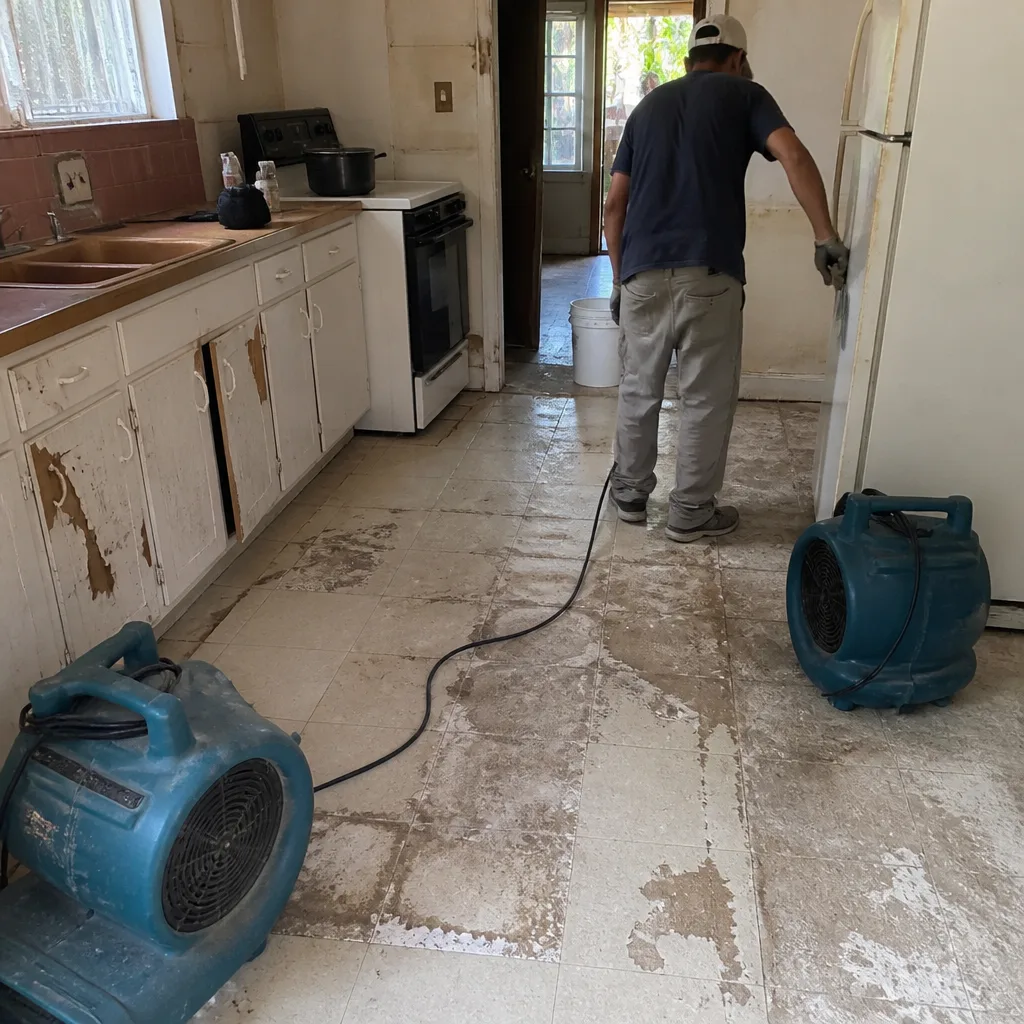
- Water extraction and drying: removing standing water and setting drying equipment to stop mold before it starts, which in Miami Beach’s humidity is measured in hours, not days.
- Shoring: temporary structural support for a compromised wall, beam, or floor.
Every one of these should come with a written scope and a written price before the work starts – even in an emergency. If a contractor can’t hand you a number in writing on a tarp job, that’s a signal about how the permanent repair will go.
Slow-Failure Emergencies Unique to Miami Beach
Not every construction emergency arrives with a name and a cone. Miami Beach has three slow-failure emergencies that do more cumulative damage than most storms, precisely because they don’t announce themselves. We’ve watched each one turn a modest repair into a five-figure job because the homeowner waited for “a good time.”
Active roof membrane separation
On low-slope roofs common across Miami Beach – especially on mid-century homes and additions – the membrane can lift at the seams and edges before you see a single interior leak. Salt air, UV, and the daily expansion-contraction cycle of a roof that goes from 90°F to 78°F every afternoon slowly work the adhesive loose. You’ll often spot it first as a ripple or bubble visible from the street, or as granules collecting in the gutter. Once the membrane is actively lifting, wind gets under it and the failure accelerates. This is a call-now condition, not a call-next-month condition.
Sudden stucco delamination
Miami Beach stucco over masonry is a durable system, but it fails when moisture gets behind it and can’t get out. The tell is a hollow sound when you tap the wall, or a section that bulges or drops away in a sheet. Delamination almost always means water has been entering somewhere above – a failed window flashing, a roof-to-wall junction, a crack that’s been painting over for years. The stucco coming loose is the symptom; the water path is the problem. That’s a job for a general contractor in Miami Beach who can trace the source, not just patch the surface.
Plumbing failures in slab foundations
Many Miami Beach homes sit on slab foundations with supply and drain lines running beneath the concrete. A slow leak under a slab doesn’t announce itself with a burst – it shows up as a warm spot on the floor, a water bill that climbs for no reason, a faint sound of running water when everything’s off, or a crack that opens in the tile above. Left alone, a slab leak undermines the foundation and can saturate the interior. If you suspect one, shut off the water at the main, call a plumber, and don’t wait to see if it “settles down.”
The Response Order That Minimizes Damage
When several things fail at once – which is exactly what a storm does – the order you handle them in determines the final bill. Water damage compounds fast in Miami Beach’s climate, and mold can begin within 24 to 48 hours in a closed-up house. Here’s the sequence:
- Stop the water and make the structure safe. Shut off utilities if there’s any question of gas or electrical damage. Never re-enter a structure with a sagging ceiling or a visibly shifted wall – get out and call for assessment.
- Document before you touch anything. Photograph and video the damage as you found it, before cleanup. This is the file your claim depends on.
- Prevent further entry of water. Tarp the roof, board the openings, and get standing water out. This is the emergency protective work described above.
- Dry the structure. Extract water, remove saturated drywall and insulation, and run dehumidification. In Miami Beach, the drying window is short and mold doesn’t wait for the adjuster.
- Get the written scope and price for permanent repair. Once the immediate threat is handled, the permanent work gets planned, permitted, and priced in writing.
That order – safety, document, protect, dry, then repair – is the same whether the emergency is a storm or a slab leak. The homeowners who follow it end up with a claim that pays and a repair that holds. The ones who start ripping out drywall on day one usually end up with neither.
What to Put in Writing With a Contractor Before Hurricane Season
You don’t need a full contract before hurricane season. You need a documented relationship. The difference matters: a full contract commits you to a scope before you know what the damage will be, while a documented relationship simply establishes that you’re an existing client with a file, so when the phones melt down after landfall you’re a known quantity, not a cold lead in a queue.
Here’s what to ask for, in writing, before June 1:
- A written record of your home’s condition and scope history. The contractor’s notes on your roof, exterior, and any prior work. This is the file that puts you at the front of the line – they already know your house.
- A stated priority arrangement. Ask directly: “If a named storm hits, where do existing clients fall in your response order?” Get the answer in writing, even as an email. It’s not a contract; it’s a commitment you can point to.
- The written-price standard, confirmed. Ask how they price emergency protective work. At Penhallow, every job gets a written price before any work starts – not a ballpark, not a verbal estimate that changes at the door.
- The guarantee terms. Ask what happens if a repair fails. Our 365-Day Done Right Promise says if it’s not done right, we make it right, at no charge, backed in writing on every project. Get that in writing before the season, not after the damage.
- Contact protocol for a disaster. Confirm how they’ll reach you and how you reach them when cell service is spotty. A live person answers our phone 24/7 – no voicemail maze – and that matters most in the first 72 hours.
The contractors who’ll be slammed after a storm don’t have time to build new relationships. They have time to serve the clients who already exist in their system. That’s the whole reason to set this up in May.
How to Spot Storm-Chaser Contractors After a Miami Beach Event
Every major storm brings a wave of out-of-town contractors who show up with a magnetic sign, a clipboard, and a story. Some are legitimate. Many aren’t, and the ones that aren’t tend to leave behind unpermitted work, unfinished jobs, and vanished deposits. Here are the specific signals to watch for.
- Out-of-state license markers. A legitimate contractor working in Miami Beach should be able to show Florida licensing. A crew with out-of-state plates, no local license, and a “we’re just helping out” explanation is a red flag. Verify the license before any money changes hands.
- Large deposits demanded up front, in cash. A demand for a big deposit – especially cash – before any work or written scope is the single most common storm-chaser pattern. Legitimate work gets a written price and a defined payment schedule.
- No written scope, just a verbal price. If they won’t put the price and the scope in writing, walk away. The number on day one is the number on the invoice, and that only holds if it’s written down.
- Pressure to sign today. “This price is only good if you sign right now” is a sales tactic, not a construction reality. Real contractors don’t need a countdown to get your business.
- No verifiable local references or history. Ask for references from Miami Beach or nearby jobs completed before the storm. A contractor who appeared last Tuesday has none.
- Offers to “handle the permit” but won’t put their license number on the paperwork. Legitimate permitted work is traceable. If the paperwork is vague, the work will be too.
The best defense is the written relationship described earlier. When you already have a contractor who knows your house, you’re not shopping in a panic – you’re calling someone who already has your file.
Common Mistakes to Avoid
- Waiting until a storm is named to document your home. A claim needs before-photos, and you can’t shoot “before” shots during a mandatory evacuation. Do the baseline walkthrough in May, every year.
- Confusing emergency tarping with permanent repair. Letting a contractor replace your roof without a permit after a disaster can void your insurance and force a tear-out. Tarp now, permit the repair when the office reopens.
- Ripping out wet drywall before photographing it. The damage documentation is what pays the claim. Shoot first, then demo – the adjuster needs to see what was there.
- Ignoring a slab leak because the water bill “isn’t that bad.” A slow slab leak in a Miami Beach home undermines the foundation quietly. By the time the tile cracks, you’re into structural repair, not a plumbing fix.
- Hiring the first crew with a magnetic sign and a clipboard. Storm-chasers target exactly this moment. Verify the license, get the scope in writing, and don’t pay a big cash deposit up front.
- Letting a stucco crack get painted over season after season. Delamination starts with water behind the wall. Patching the surface without finding the water path just hides the problem until it’s a bigger one.
- Skipping the written price on emergency work. Even a tarp job should come with a written number. If a contractor won’t put it in writing, that tells you how the permanent repair will go.
When to Call a Professional
Some emergencies are obvious – a lifted roof membrane, a wall that’s shifted, water pouring through a ceiling. Those are call-now. Others are quieter and easy to put off: a hollow-sounding patch of stucco, a warm spot on the floor, a water bill that climbed for no reason. Those are the ones that cost the most when they’re ignored, because the damage compounds in Miami Beach’s humidity while you wait for “a good time.” If you’re unsure whether something is an emergency or a maintenance item, call and ask. A live person answers our phone 24/7 – no voicemail maze, no callback window. Penhallow Remodeling Miami Beach offers free estimates in Miami Beach. Call (844) 656-1986. Every job gets a written price before any work starts, and our 365-Day Done Right Promise is backed in writing on every project. Our technicians are background-checked, arrive in uniform, and have up to 22 years of experience. If you’re planning ahead rather than reacting, start with our Penhallow Remodeling Miami Beach home page, or explore kitchen remodeling in Miami Beach if the slow-failure you’re facing is really a remodel waiting to happen.
See the difference
 Before
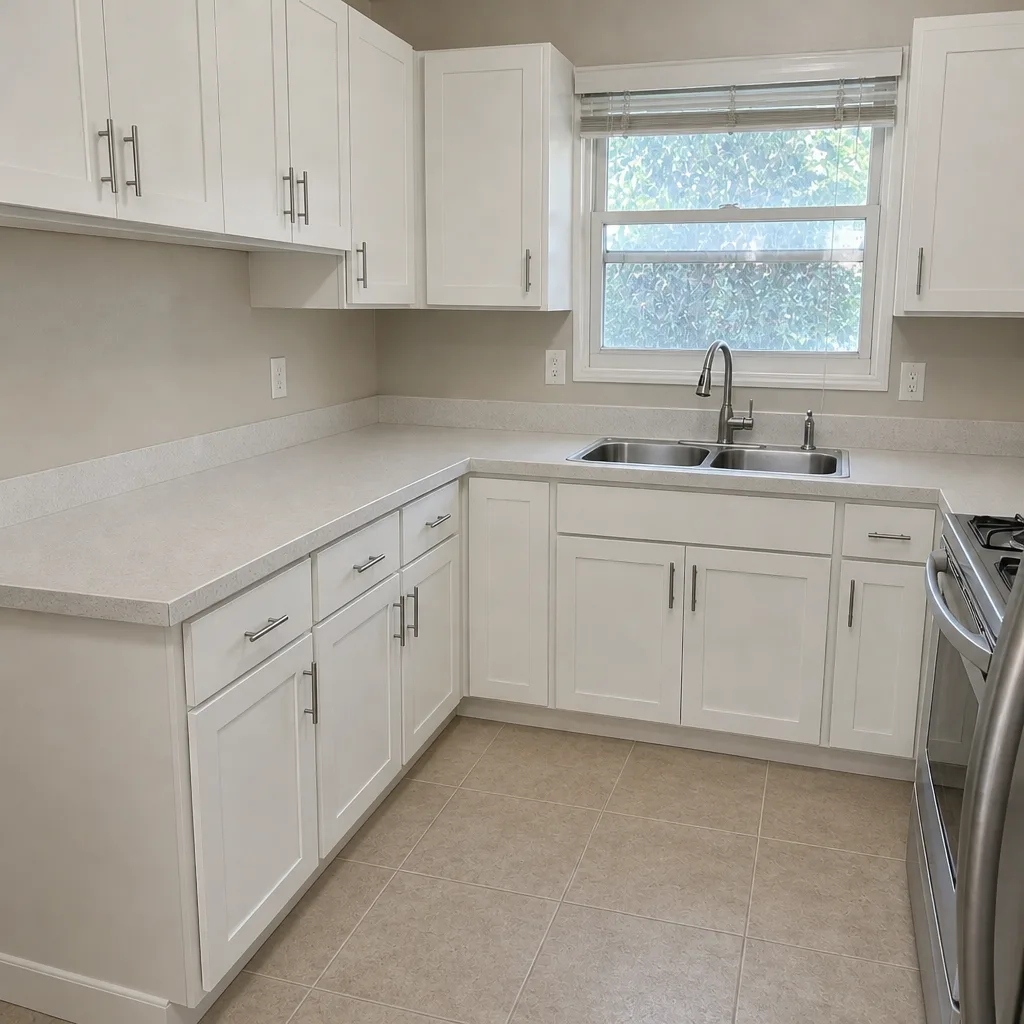 After
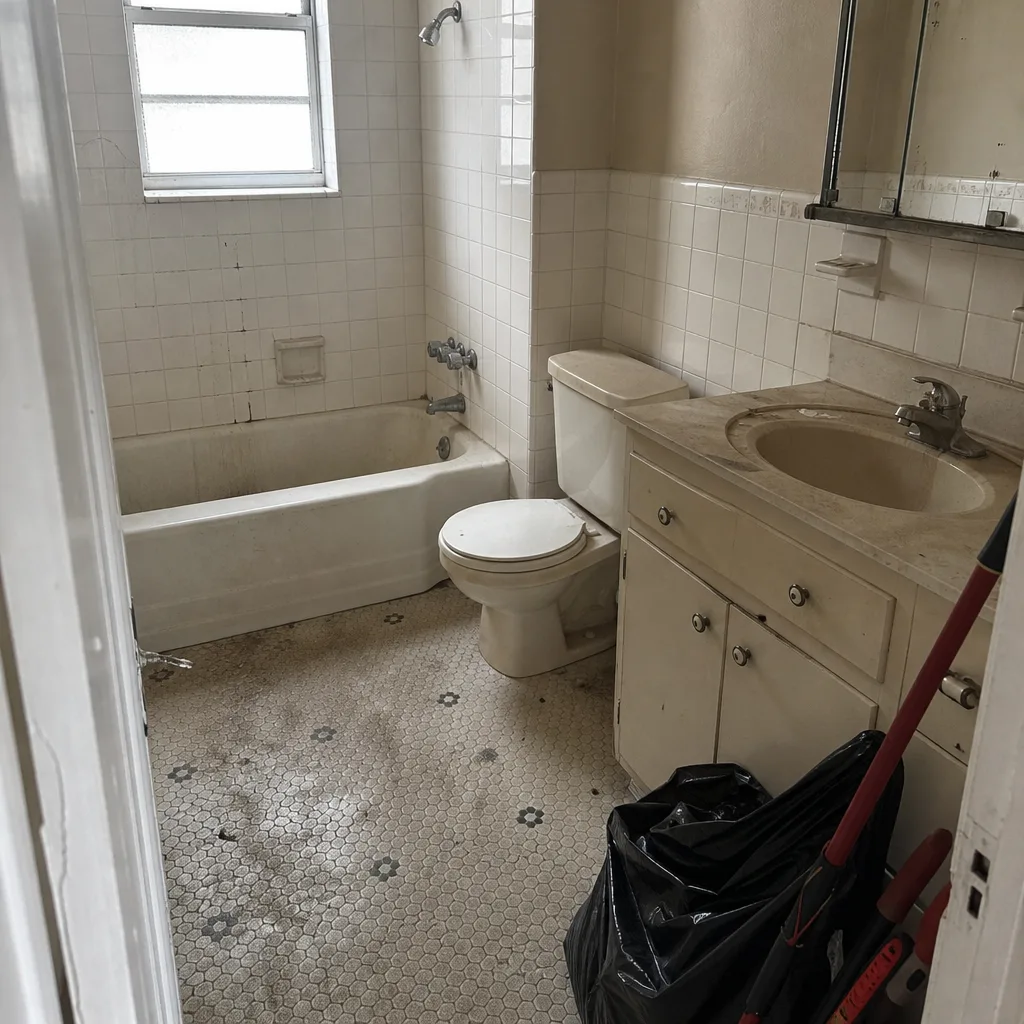 Before
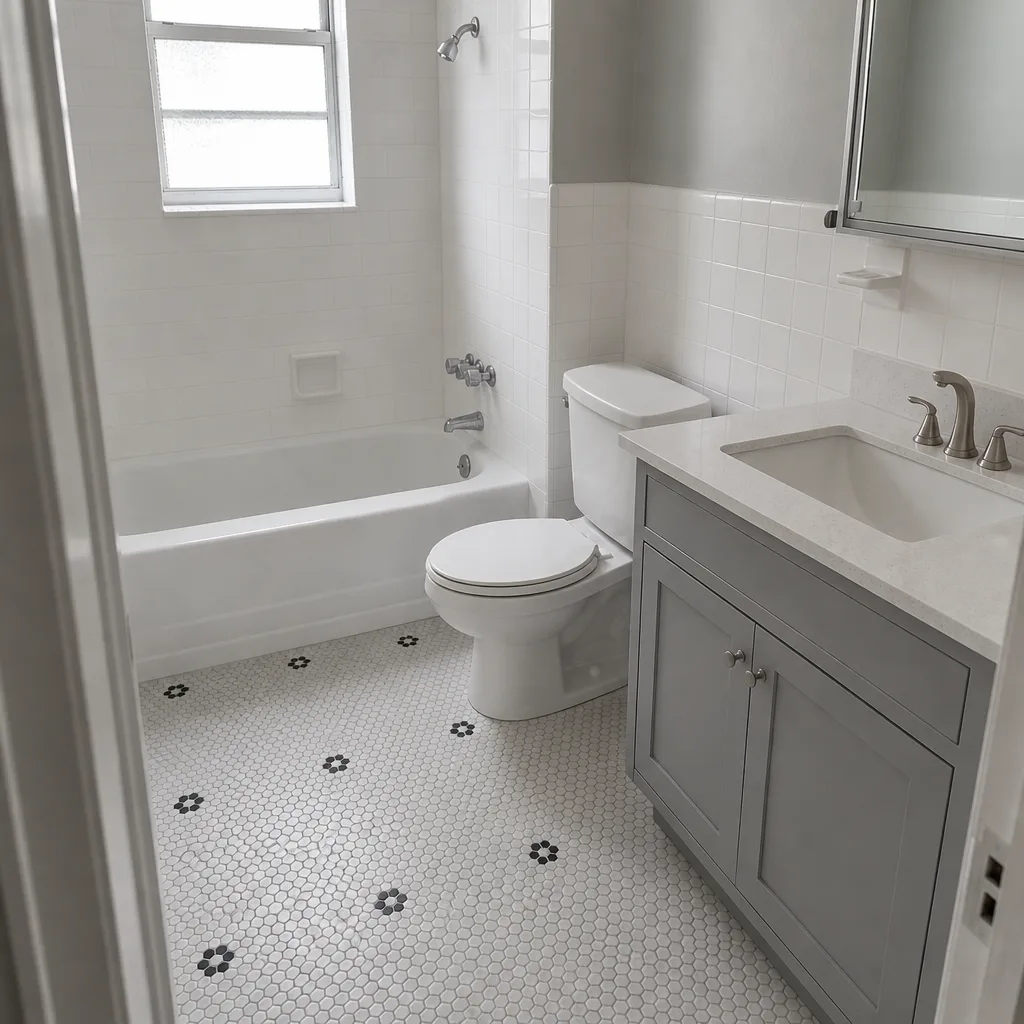 After
 Before
 After
Frequently Asked Questions

Document the damage before you touch anything, then make the structure safe and prevent further water entry. Photograph and video everything as you found it – that file is what your insurance claim depends on. After that, tarp the roof and board openings to stop more water getting in, then get the water out and start drying. In Miami Beach, mold can begin within 24 to 48 hours, so drying isn’t something to schedule for later in the week. Call (844) 656-1986 for a free estimate on the permanent repair once the immediate threat is handled.
No – a contractor can perform emergency protective measures like tarping without a permit, but permanent roof replacement requires a permit. After a declared disaster in Florida, licensed contractors can tarp, board up, extract water, and shore up compromised structure to prevent further damage. The permanent repair – new roof deck, new membrane, structural rebuild – waits for the permit office to reopen and inspections to resume. If a contractor offers to “just replace the whole roof” the day after landfall, that’s a red flag. Call (844) 656-1986 for a written scope on what’s legal now and what waits for permitting.
Emergency tarping in Miami Beach typically runs a few hundred to a couple of thousand dollars depending on roof size, pitch, and how much area needs covering. It’s usually priced per square of roof area plus a mobilization charge, and it’s the cheapest line item in a storm recovery – far less than the water damage a day of exposure causes. Get the price in writing before the work starts, even in an emergency. Call (844) 656-1986 for a free estimate.
The clearest signals are no Florida license, a demand for a large cash deposit up front, no written scope, and pressure to sign today. Legitimate contractors working in Miami Beach can show Florida licensing, put the price and scope in writing, and don’t need a countdown to win your business. Ask for references from before the storm. If the paperwork is vague, the work will be too. Call (844) 656-1986 if you want a written price and a written guarantee before work starts.
A slow-failure emergency is damage that escalates quietly over weeks or months rather than arriving with a storm – roof membrane separation, stucco delamination, and slab plumbing leaks are the three most common in Miami Beach. They do more cumulative damage than most storms precisely because they’re easy to put off. Salt air, UV, and the daily heat cycle work roof seams loose; moisture trapped behind stucco shows up as a hollow sound or a bulging section; a slab leak shows up as a warm floor spot or a climbing water bill. Call (844) 656-1986 for a free estimate before the small problem becomes a large one.
No – the number on day one should be the number on the invoice, and that only holds if it’s in writing. Every job at Penhallow gets a written price before any work starts: not a verbal ballpark, not an estimate range that changes at the door. That standard applies to emergency protective work too. If a contractor won’t put a tarp job in writing, ask why. Call (844) 656-1986 for a written price and our 365-Day Done Right Promise, backed in writing on every project.
The Bottom Line
Construction emergencies in Miami Beach come in two flavors – storm-driven and slow-failure – and the homeowners who handle both best are the ones who planned before the emergency, not during it. That means a dated baseline file your insurance claim can lean on, a clear understanding that emergency tarping is legal without a permit but permanent repair isn’t, a response order that puts safety and documentation ahead of demolition, and a written relationship with a licensed contractor before the season turns. The storm-chasers will still show up after the next event. You just won’t need them. If you want that relationship in place now, call (844) 656-1986 for a free estimate – a live person answers 24/7, and we’ll give you a written price before any work starts. Our technicians are background-checked, arrive in uniform, and have up to 22 years of experience, and every project carries our 365-Day Done Right Promise, backed in writing.
Written by the team at Penhallow Remodeling Miami Beach.