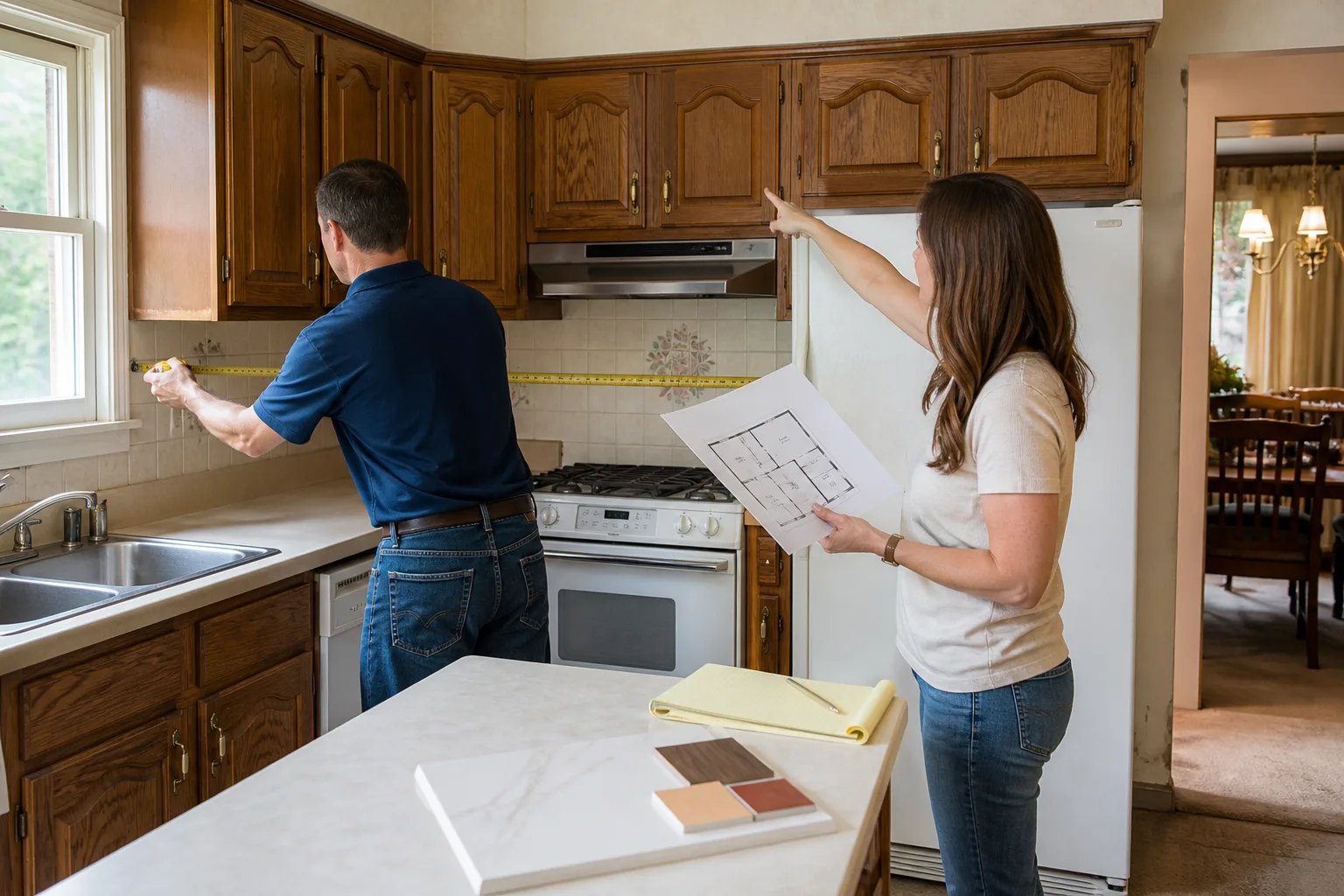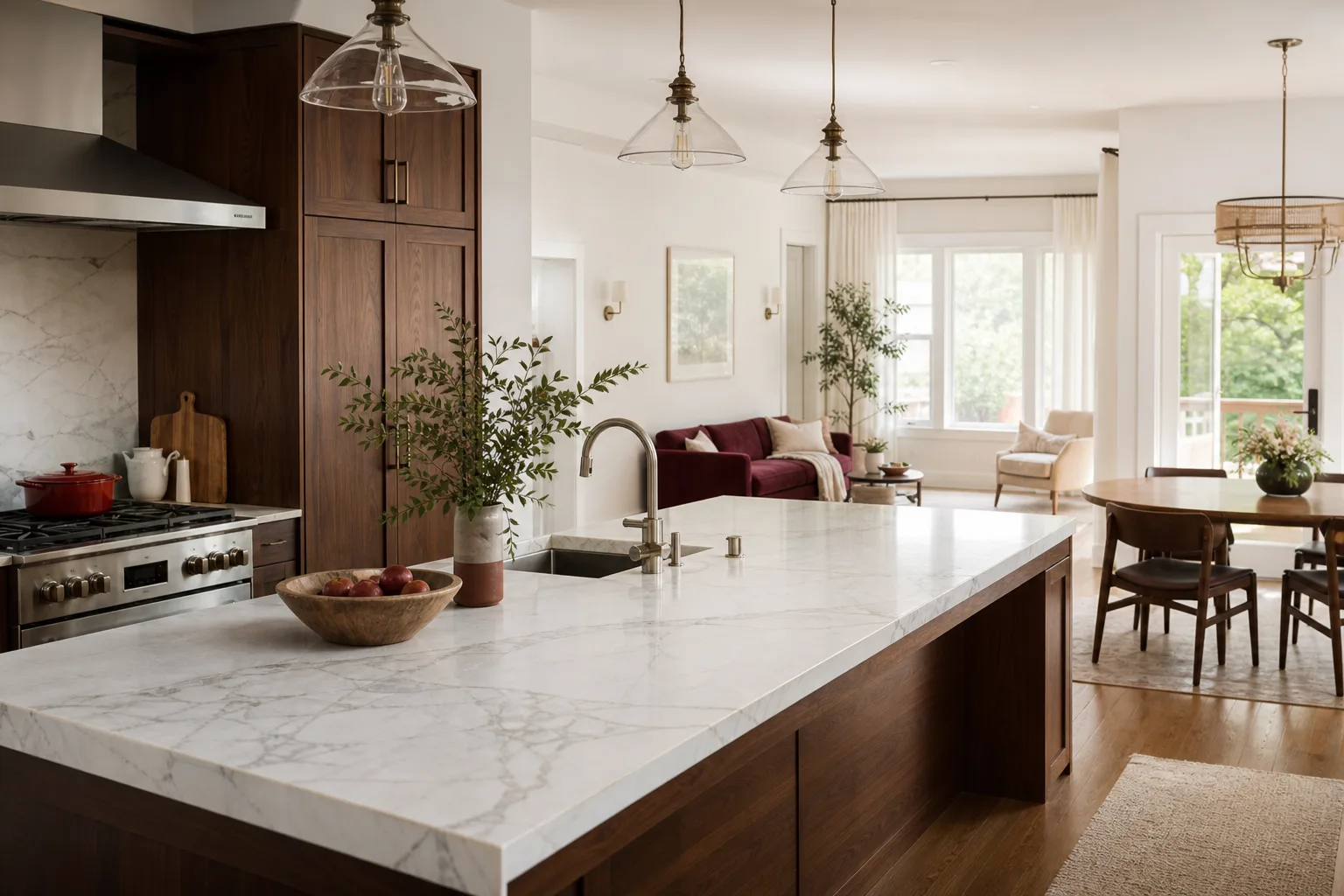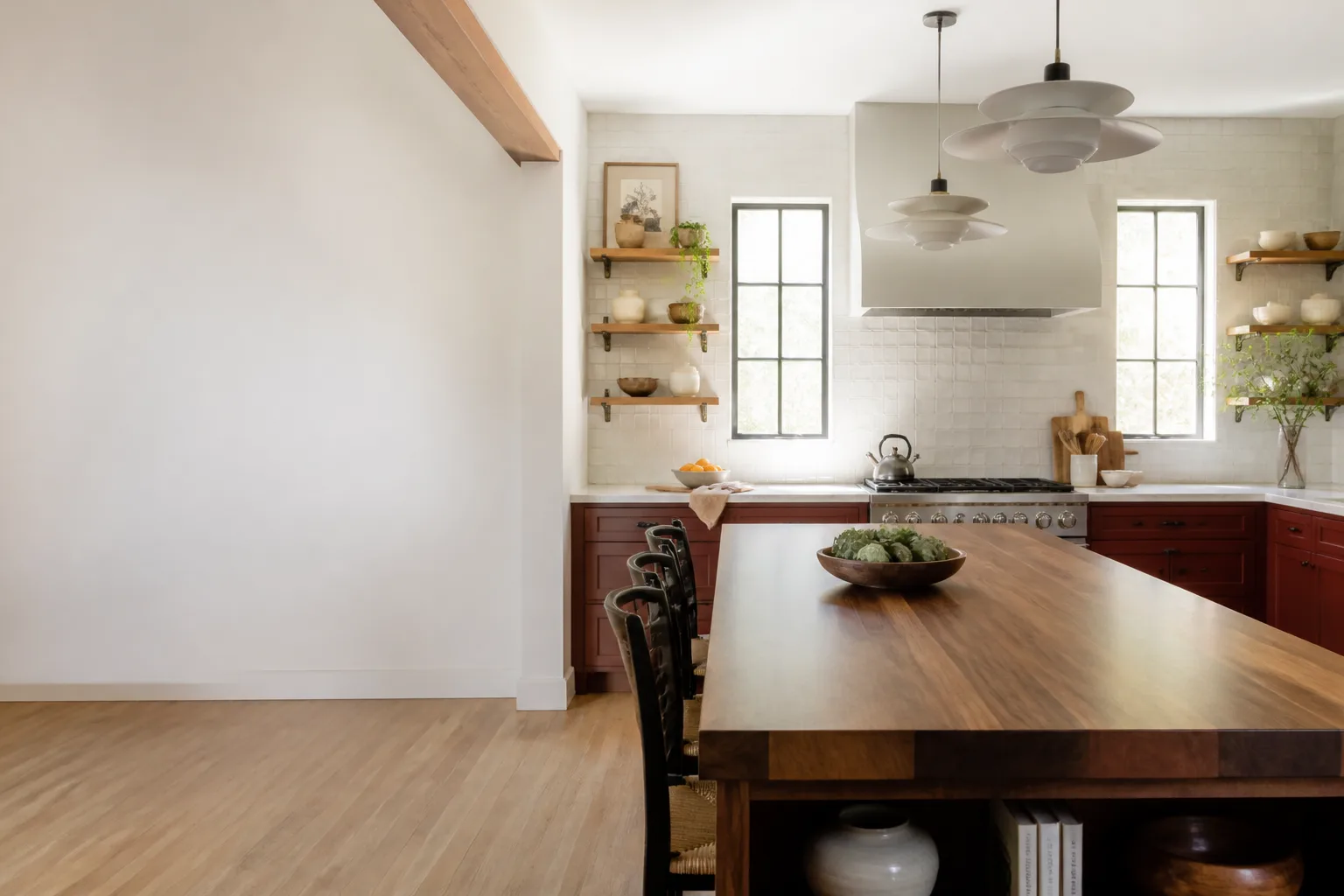



Free written scope consultation - allowances, timeline, and change-order rules on paper before a single trade is scheduled
Styles & brands we work with
- Kitchen remodeling
- Bathroom remodeling
- Home additions & ADU
- Roofing
- Windows & doors
- Driveway & pavers
- Fence
See the difference
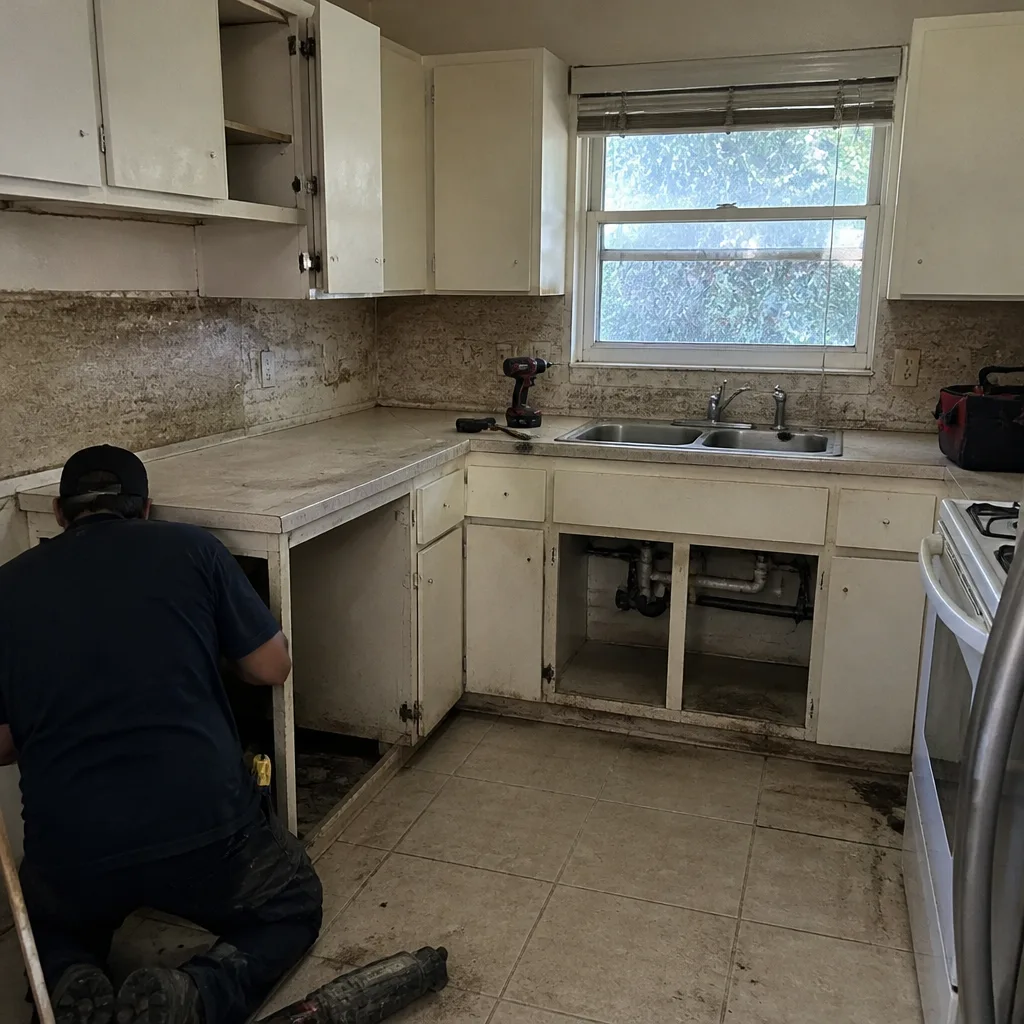 Before
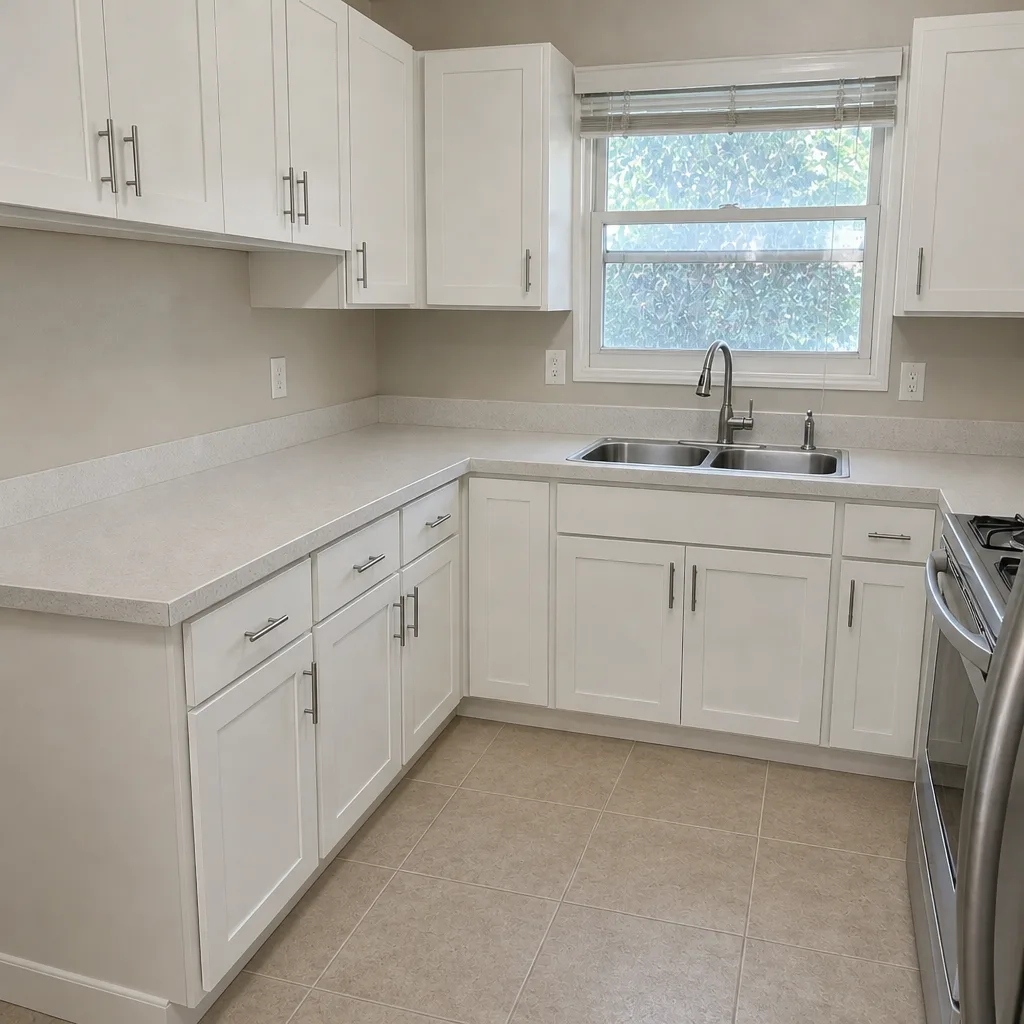 After
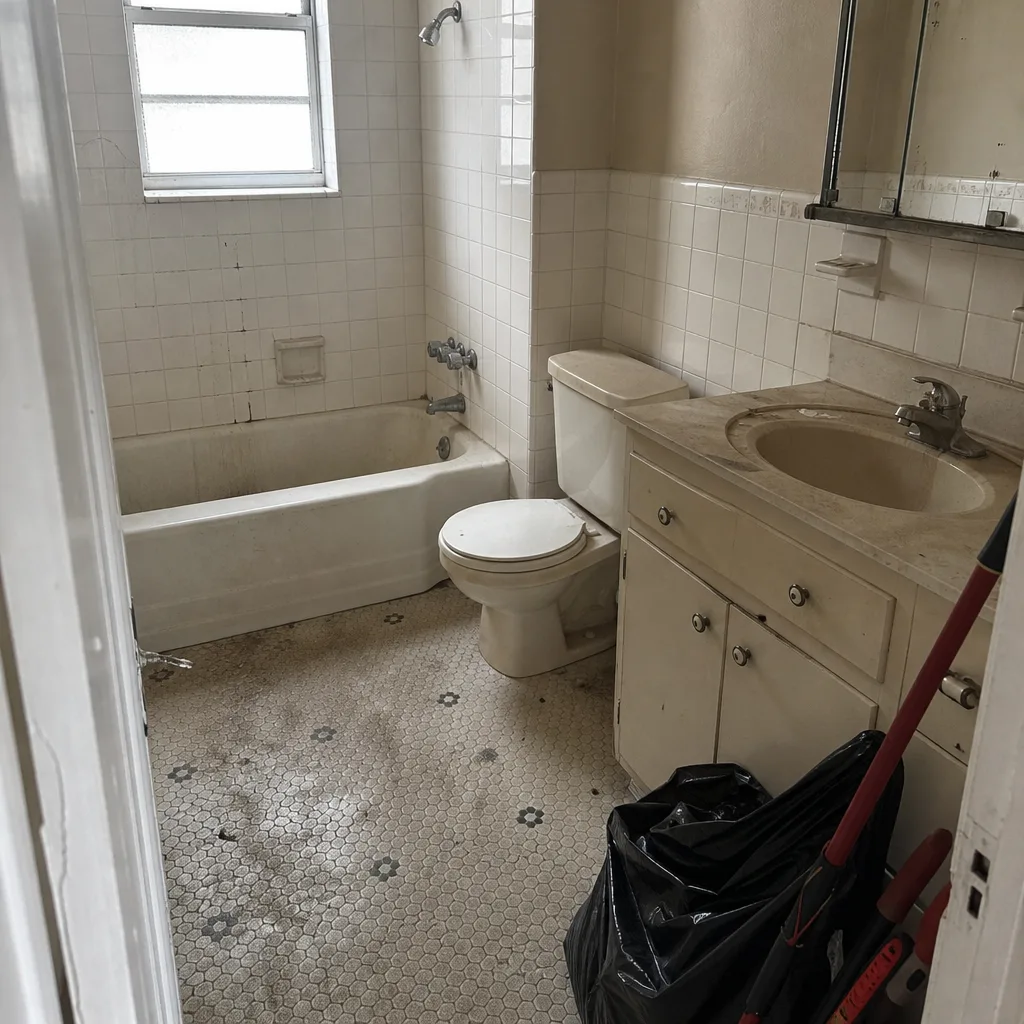 Before
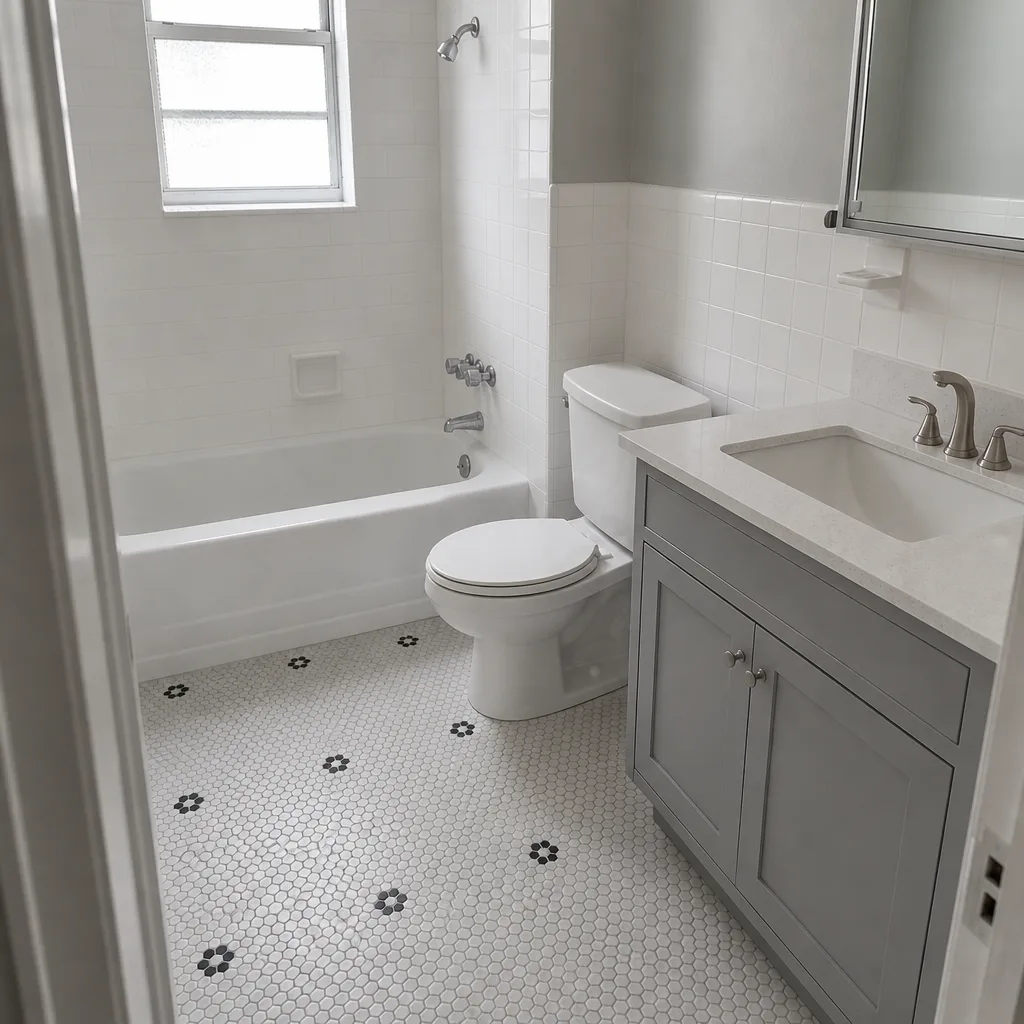 After
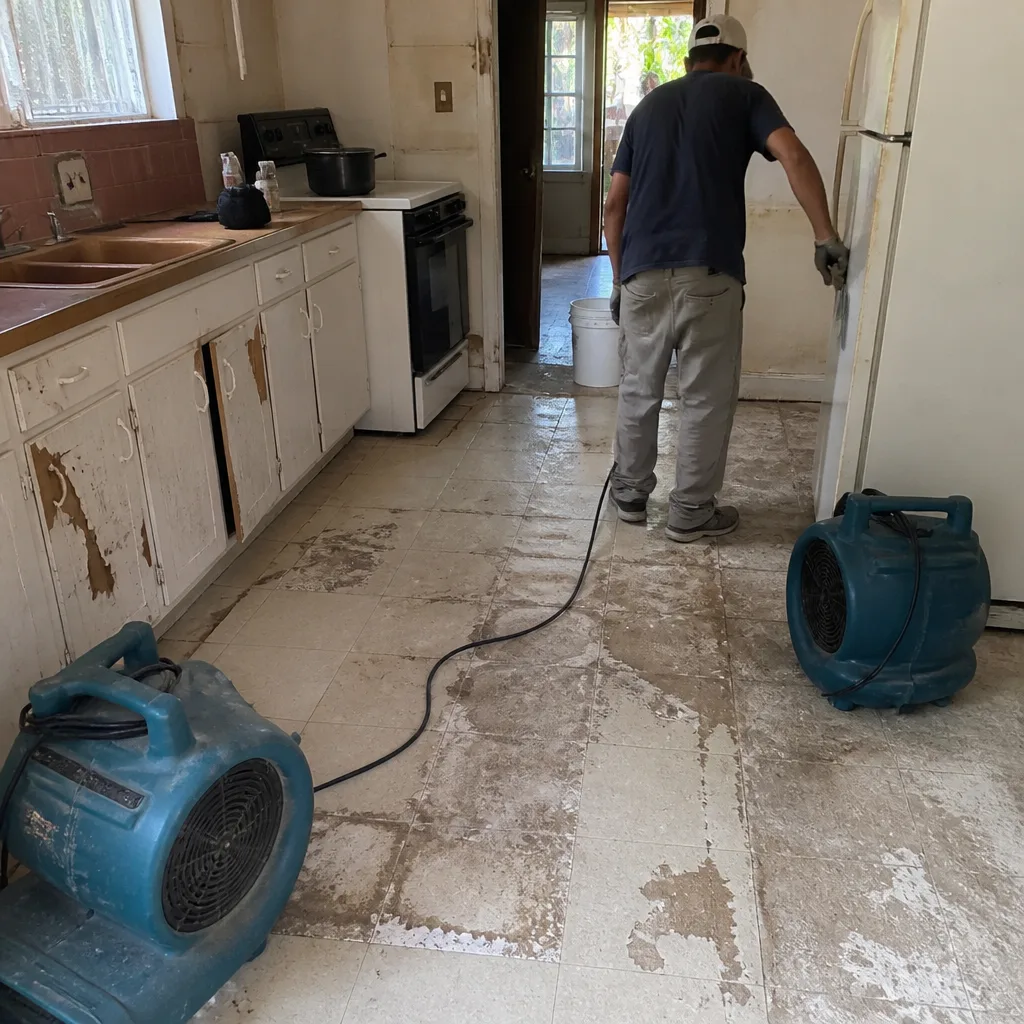 Before
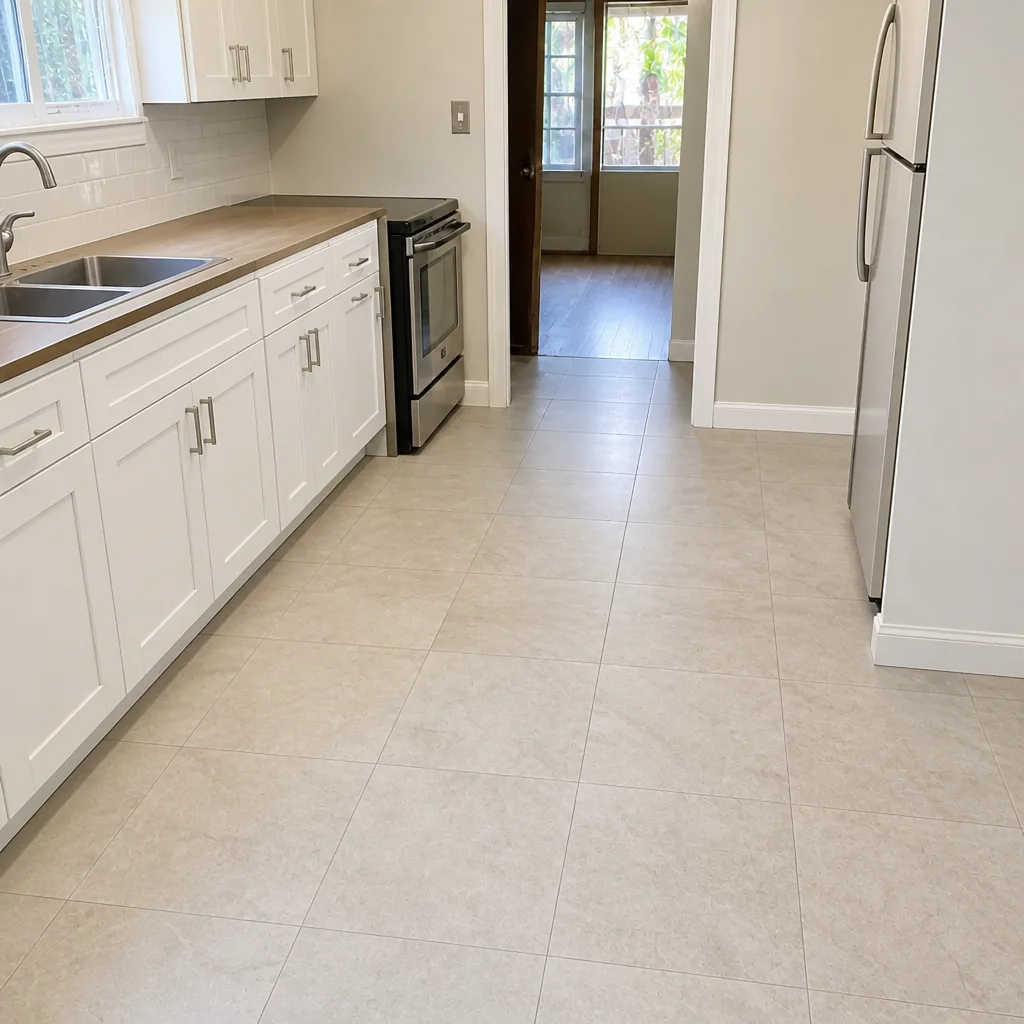 After
Quartz vs Granite Countertops in Miami Beach: Which One Holds Up in Salt Air and Humidity?
For a Miami Beach kitchen, choose quartz unless you’re set on the uniqueness of a natural slab and don’t mind resealing it. Cambria, Silestone, and Caesarstone quartz are sealed at the factory, so they never absorb the salt-laden humidity that granite pulls in here. Granite is beautiful and tough, but in this coastal subtropical climate it asks for professional resealing every 1 to 2 years. If you want a countertop that stays sealed for good, quartz is the defensible local answer. Call (844) 656-1986 for a free estimate and we’ll give you a written price before any work starts.
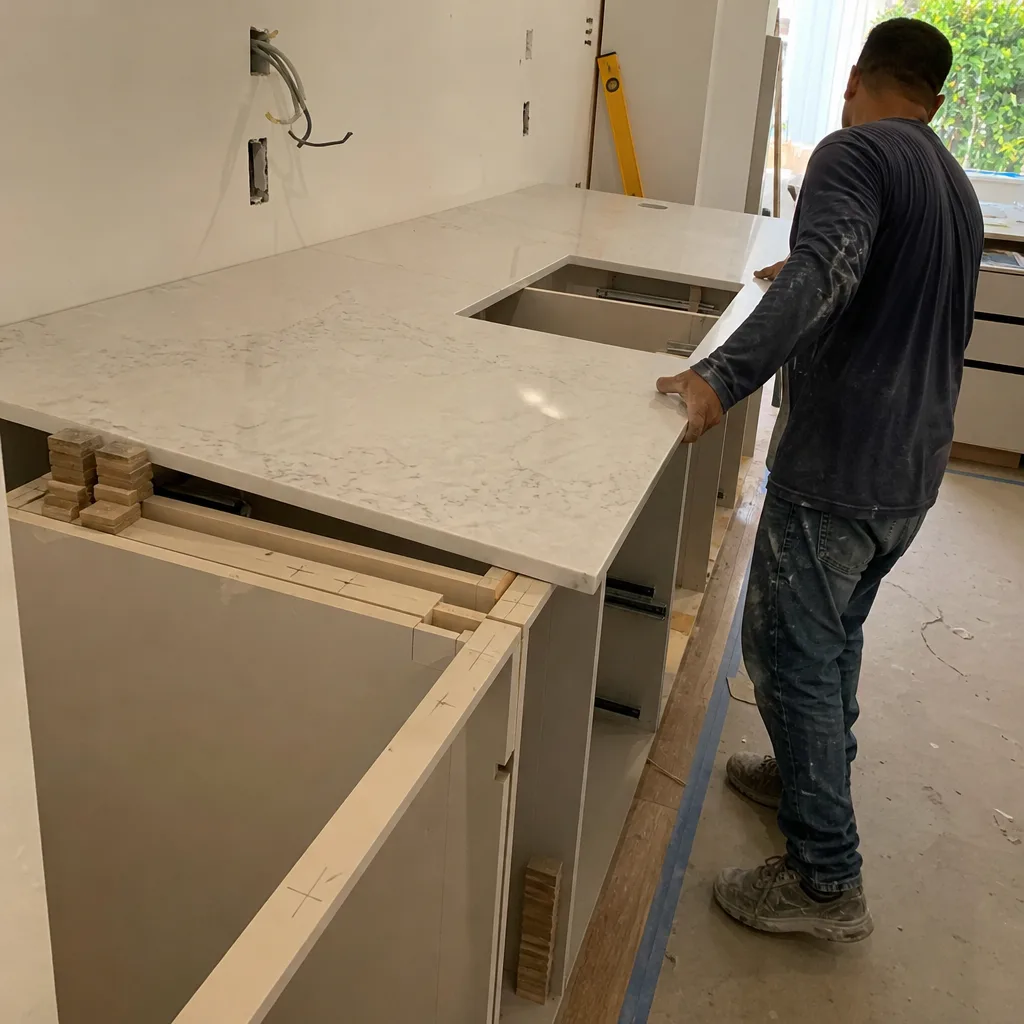
Miami Beach sits on a barrier island where the Atlantic and Biscayne Bay meet, and that changes how a kitchen behaves. Between the ocean air, the humidity, and the swing from air-conditioned 70°F interiors to 90°F-plus when the sliding doors open, your countertop lives in conditions a showroom in a dry climate never simulates. That’s the frame we use when a homeowner asks us which surface to pick.
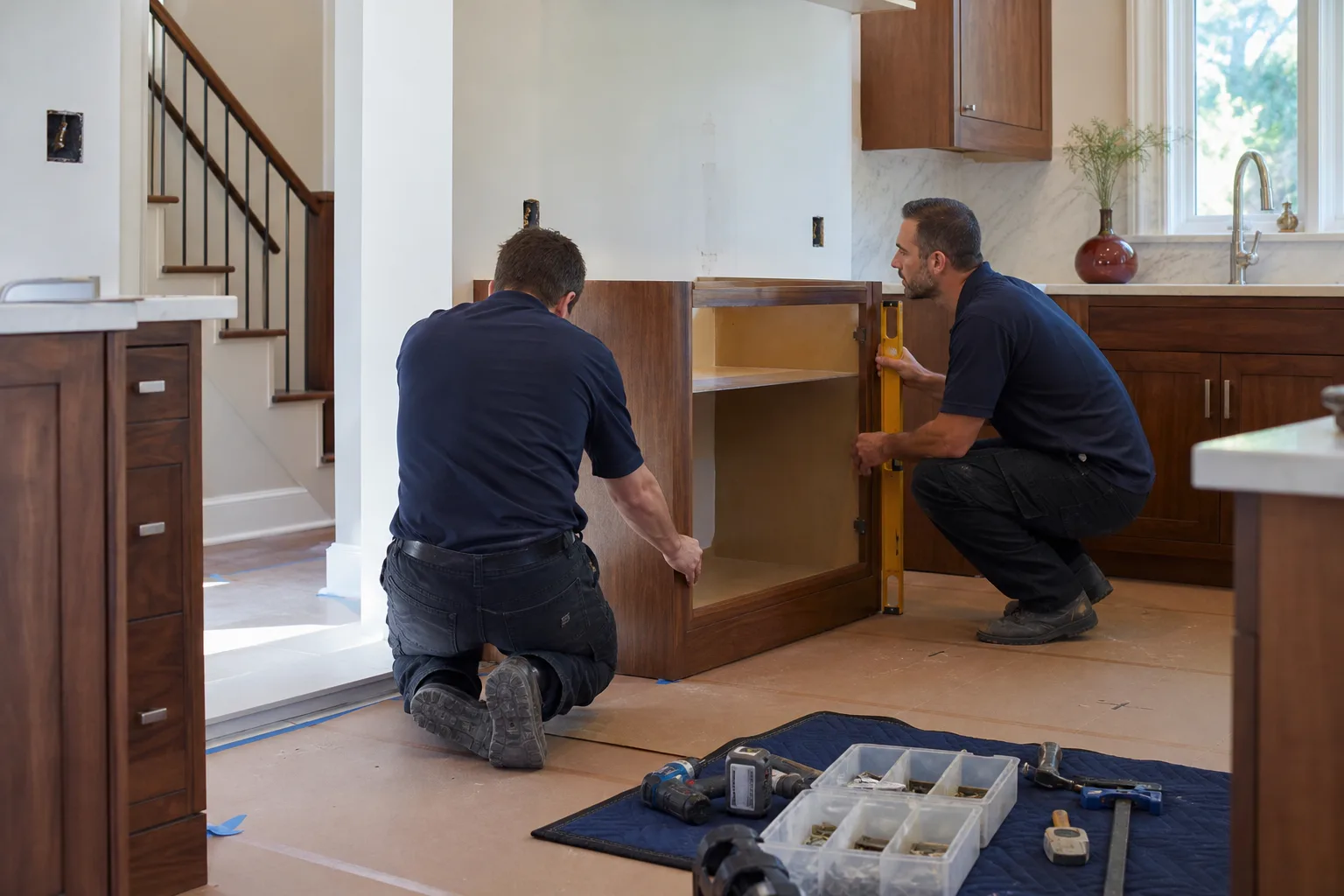
What’s the real difference between quartz and granite in a Miami Beach kitchen?
The plain answer: granite is porous natural stone, and quartz is engineered stone that’s non-porous by design. Granite is quarried, cut, and polished, but it keeps microscopic pores that take in whatever sits on it. Quartz is ground quartz crystal bound with resin and sealed at the factory, so it starts non-porous and stays that way. In a Miami Beach kitchen, that difference matters more than it does almost anywhere else in the country.
Here’s what we see on the ground. A granite countertop that goes 18 months without resealing can absorb enough airborne salt and cooking grease to stain permanently, and those marks don’t polish out. The ocean air carries fine salt that settles on every surface, and the humidity keeps it slightly damp, which is exactly the condition that drives it into stone. Cooking near the range adds grease to the mix. So a granite owner in Miami Beach isn’t just maintaining a countertop, they’re managing a resealing schedule that has to actually get done.
Quartz skips that. Cambria, Silestone, and Caesarstone don’t need sealing, not on installation day and not two years later. Wipe them down and you’re finished.
The lifetime cost of resealing vs. never sealing
On a 40-linear-foot kitchen, the maintenance clock is real. Professional granite resealing in this market runs roughly $300 to $600 per visit depending on square footage and access, and in Miami Beach’s humidity and salt air you’re on a 1 to 2 year cycle if you want to protect the stone. Over a decade that’s several reseal visits you’d never schedule with quartz. The countertop installation line itself, whether granite or quartz, typically falls in our $2,360 to $7,670 range here, so the material price gap is often smaller than the maintenance gap that follows it.
Does Miami Beach’s heat-and-AC swing crack natural stone?
It can, at the seams, and it’s one of the things national comparison guides miss. A Miami Beach kitchen cycles hard: 70°F inside with the AC running, then 90°F-plus the moment a door opens onto a summer afternoon. Natural stone expands and contracts more than engineered quartz under that swing. Over seasons, that movement shows up as hairline cracking along the seams where slabs meet, and grout lines get stressed too. It’s not a guarantee of failure, but barrier-island conditions ask more of natural stone than a steady-climate kitchen does.
Engineered quartz moves less, so seams stay tighter over time. If you’re remodeling in an Art Deco or Mediterranean Revival building from the 1920s through the 1940s, many of which sit on original coral rock footings and Dade County pine framing, the cabinet runs behind your counters may not be perfectly level either. That’s exactly why installation quality matters as much as the slab. A countertop that’s set flat and templated carefully handles thermal movement far better than one chasing an uneven old wall.
Where does granite actually win?
Granite wins in two honest cases, and we’ll tell you when they apply.
- High-heat cooking on the surface itself. If you regularly set a hot cast-iron pan straight down, natural stone takes direct heat a bit more gracefully than resin-bound quartz. Most Miami Beach cooks use a trivet, but if you don’t, granite has an edge here.
- You want a slab no one else has. Every granite slab is unique. Quartz patterns repeat. If the singular look of natural stone is the whole point for you, that’s a legitimate reason to choose it.
For most Miami Beach kitchens, though, that’s the minority use case. The typical homeowner here wants a surface that looks right, wipes clean, and doesn’t ask for a resealing appointment every year. And there’s a resale angle worth saying plainly: Miami Beach condo and home buyers tend to have lived in coastal environments before, so they know what natural stone costs to maintain. Engineered quartz from a recognized brand like Cambria shows up more and more in Miami Beach real estate listings, and buyers read it as a low-maintenance upgrade rather than a compromise.
How we source countertops for a Miami Beach kitchen
Cambria, Silestone, and Caesarstone are the three quartz brands we carry because their warranties hold up in coastal climates, and they’re brands your buyer will recognize. That matters when it’s time to sell. Penhallow Remodeling Miami Beach writes the material warranty documentation into your project file so you’re holding the product’s coverage in writing alongside our own.
That’s the second layer of protection. The first is Kitchen Remodeling done to a written standard: a written price before any work starts, a real arrival window, a clean job site, and our 365-Day Done Right Promise, which means if the work fails inside the guarantee period we come back and fix it at no charge. If something needs a second look after install, the return visit is free. No service call, no re-inspection fee.
Here’s what a full kitchen project typically runs in Miami Beach, so you can budget around the countertop line:
| Project | Typical range in Miami Beach |
|---|---|
| Kitchen remodel (full) | $16,520-$53,100 |
| Small kitchen remodel | $10,620-$23,600 |
| Cabinet installation | $4,720-$15,340 |
| Countertop installation | $2,360-$7,670 |
| Backsplash installation | $945-$2,950 |
| Kitchen island installation | $3,540-$11,800 |
What pushes a number up or down: cabinet line (we install KraftMaid and Wellborn, both built for humid climates), layout changes that move plumbing or electrical, and countertop material and edge profile. What holds the number steady is the up-front written price. You get the number on day one, and it’s the number on the invoice.
What to check before you choose a countertop in Miami Beach?
Run through these before you commit, because each one changes the answer:
- How much direct sun does the kitchen get? A west-facing kitchen with big sliders runs hotter and cycles more.
- Do you actually reseal? Be honest. If a yearly maintenance task won’t happen, quartz is the safer choice for you.
- Are you planning to sell in the next five years? Recognized quartz brands read well in Miami Beach listings.
- Will you set hot pans directly down? If yes, weigh granite seriously.
- What’s the cabinet run underneath? Old framing and coral rock footings mean a careful template, not a rush job.
If you’d like a second set of eyes on your kitchen, our home page spells out how we work and what the guarantee covers. We also handle Kitchen Remodeling in Miami Beach end to end, so the countertop, cabinets, and backsplash come together under one written price and one guarantee.
FAQs
Countertop installation in Miami Beach typically runs $2,360 to $7,670, and the material price gap between a mid-grade granite and a mid-grade quartz is often modest. The real cost difference shows up later: granite needs professional resealing every 1 to 2 years in this humidity and salt air, which quartz never does. Call (844) 656-1986 for an exact written quote – estimates are free.
Yes, and more often than a national guide suggests. The combination of salt-laden ocean air and constant humidity means granite can take in salt and grease together, and a countertop left unsealed for about 18 months can stain permanently. Plan on professional resealing every 1 to 2 years if you want the stone protected. Call (844) 656-1986 and we’ll walk you through the options.
Quartz from a recognized brand like Cambria, Silestone, or Caesarstone tends to appeal more to Miami Beach buyers, who are often familiar with the maintenance burden of natural stone in coastal homes. It reads as a low-maintenance upgrade in listings. That said, a beautifully unique granite slab can still impress. Call (844) 656-1986 to talk through your specific kitchen.
Often yes. Countertops are templated after cabinets are set, so timing depends on where your project sits. We give you a real arrival window and a written price before work starts, and a live person answers the phone any hour, so you’re never guessing. Call (844) 656-1986 to check availability and get a free estimate.
If you’d rather have it looked at, Penhallow Remodeling Miami Beach offers a no-pressure assessment in Miami Beach – call (844) 656-1986. You’ll get a written price and the guarantee spelled out before anything begins. Our technicians have up to 22 years of experience, arrive background-checked and in uniform, and stand behind the finished work with our 365-Day Done Right Promise. No voicemail, no callback window, just a real answer when you call.
Written by the team at Penhallow Remodeling Miami Beach, serving Miami Beach, FL.