
Free written scope consultation - allowances, timeline, and change-order rules on paper before a single trade is scheduled
Styles & brands we work with
- Kitchen remodeling
- Bathroom remodeling
- Home additions & ADU
- Roofing
- Windows & doors
- Driveway & pavers
- Fence
See the difference
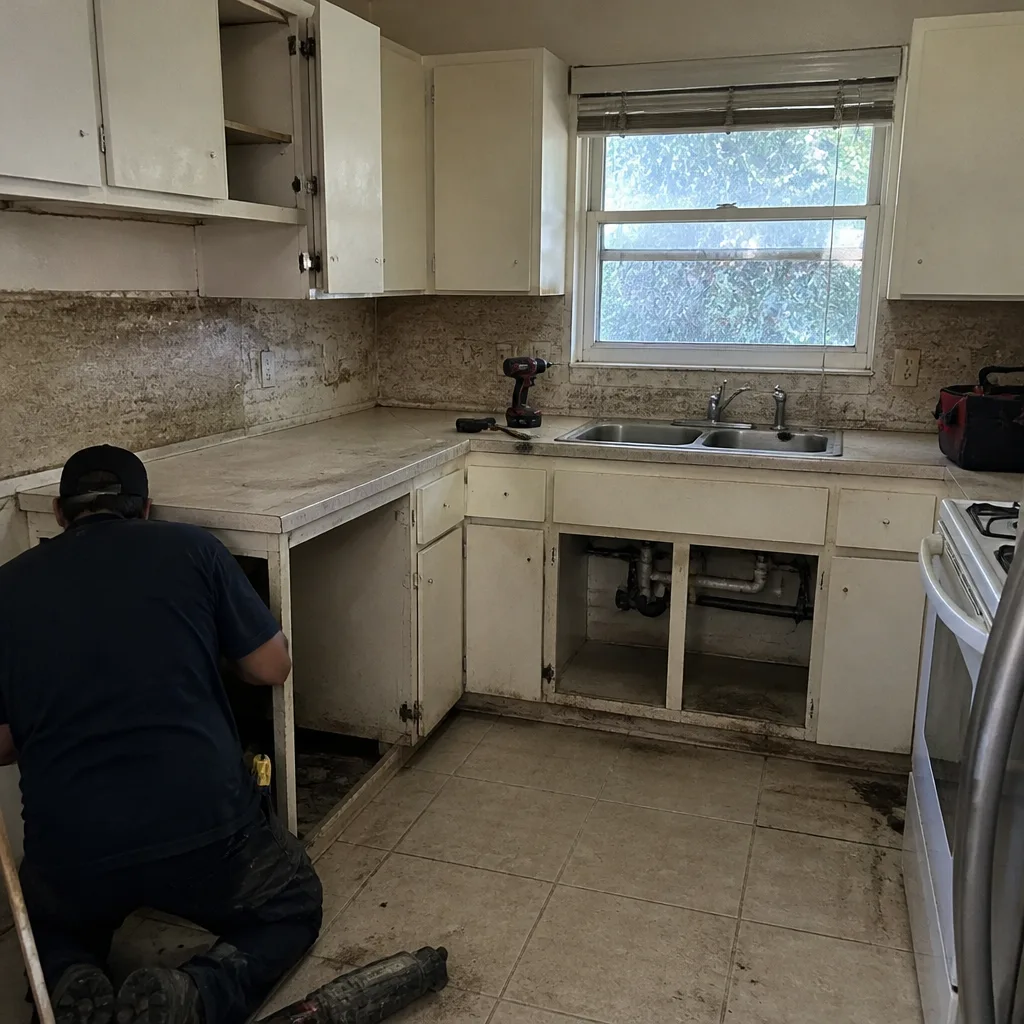 Before
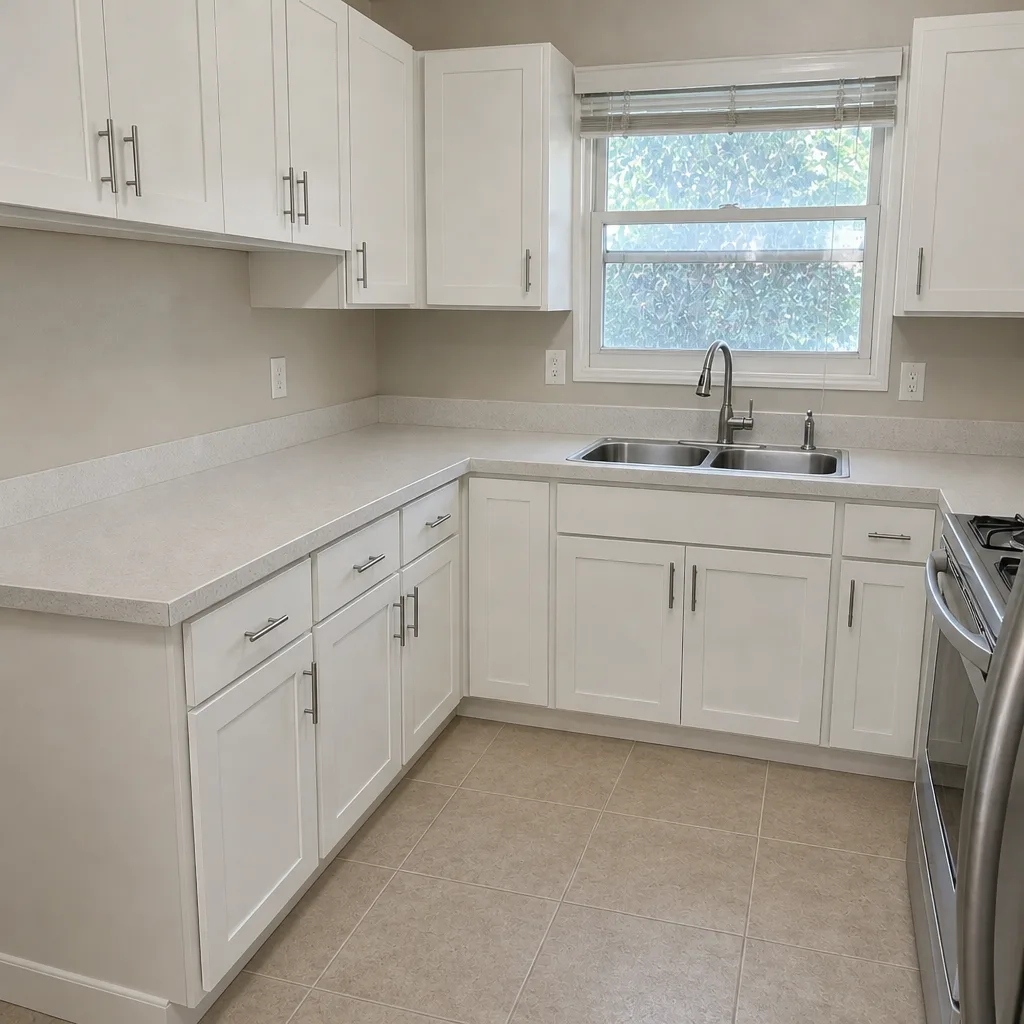 After
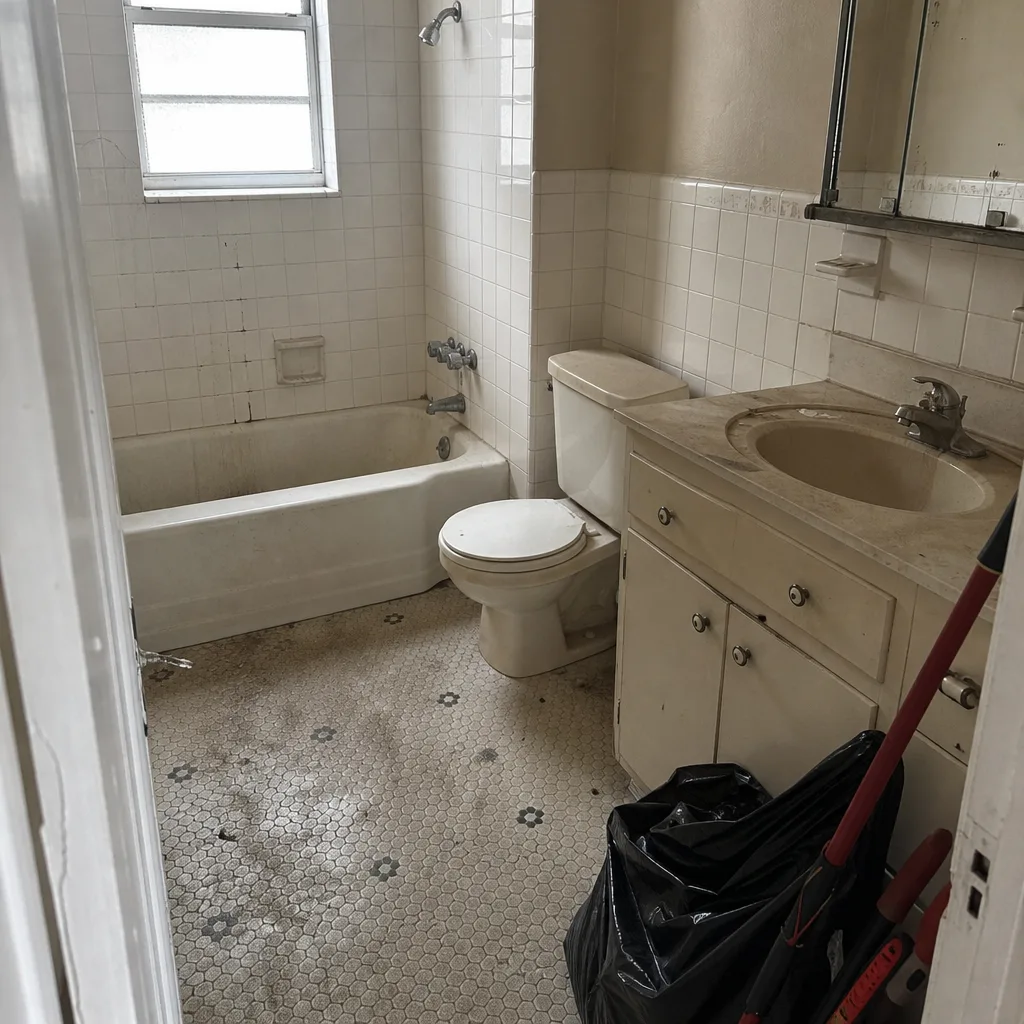 Before
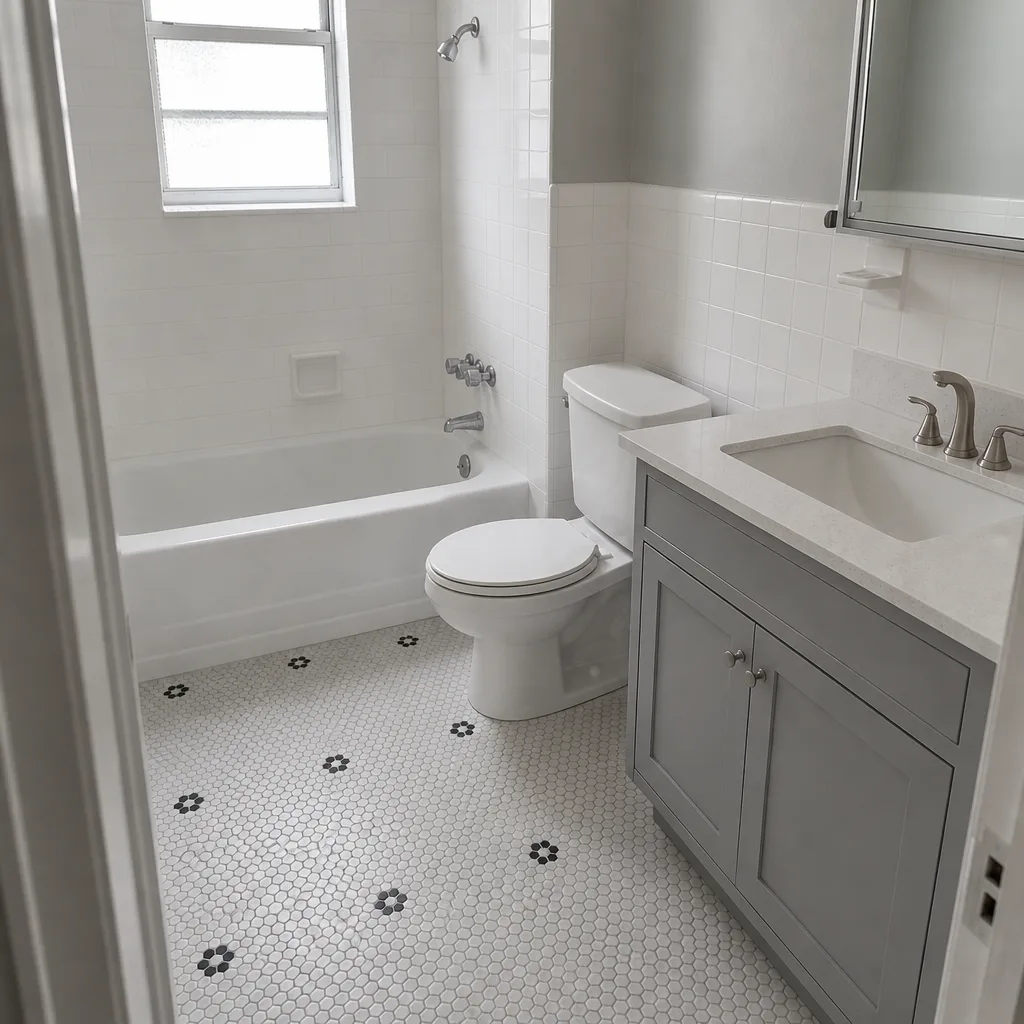 After
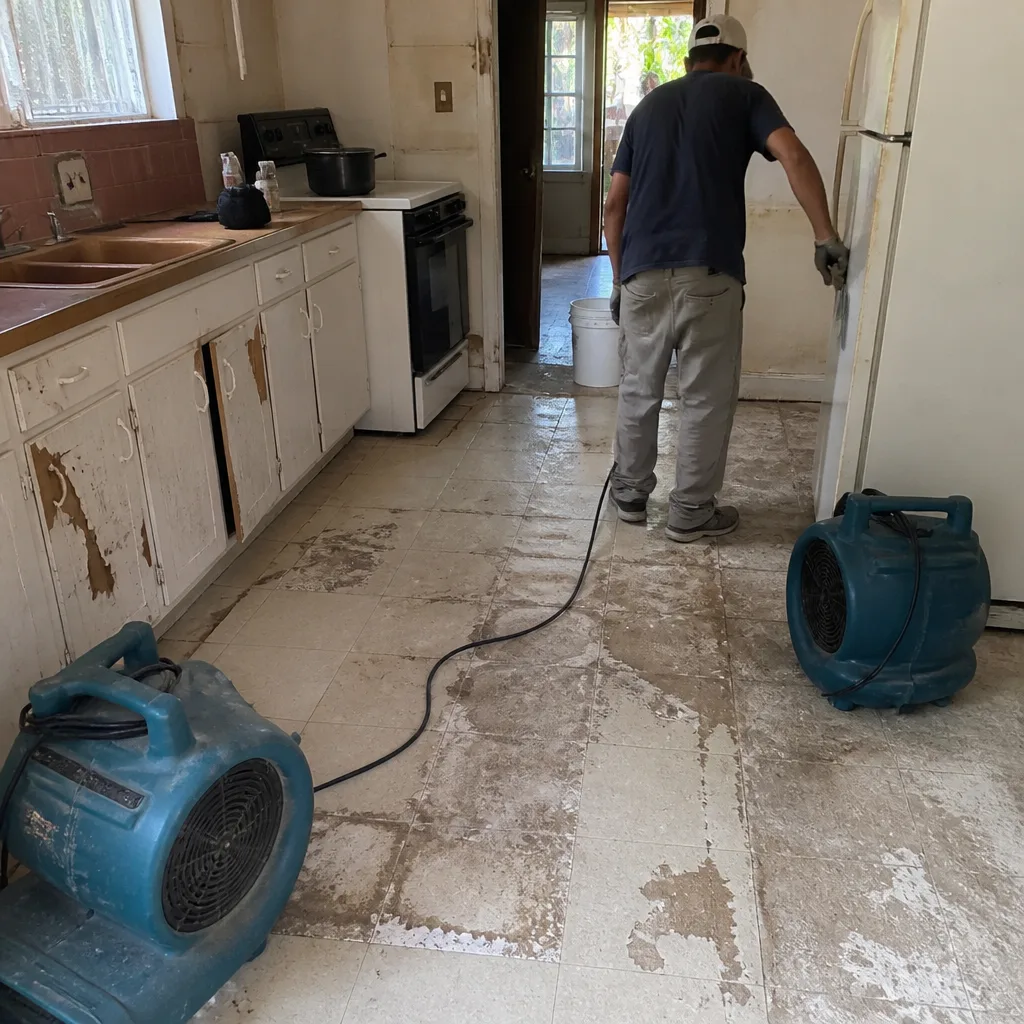 Before
 After
Tile vs. Vinyl Plank Kitchen Flooring in Miami Beach: Which One Survives the Ground Up?
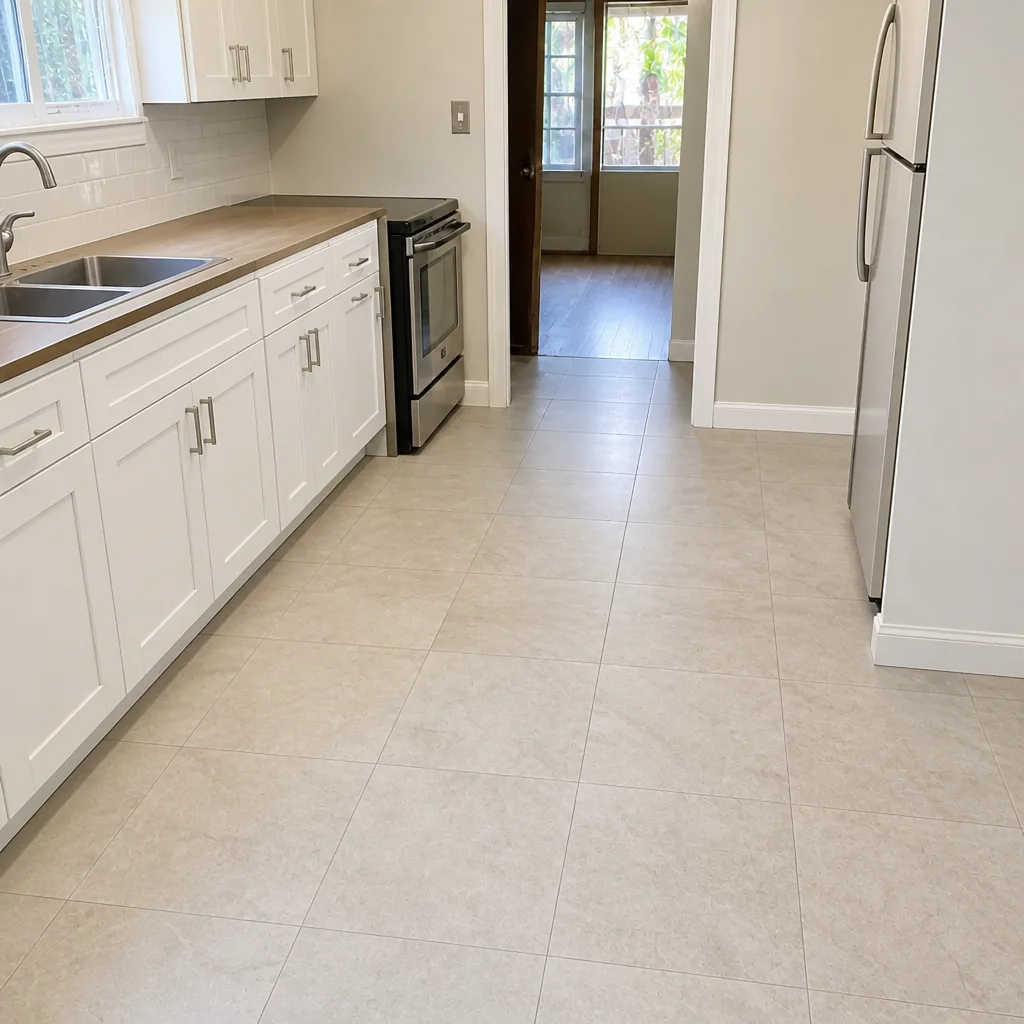
Choose porcelain tile with epoxy grout for a ground-floor Miami Beach kitchen, and consider luxury vinyl plank only for an upper-floor or condo kitchen sitting on a fully dry concrete deck with a moisture test on record. The reason isn’t looks. In Miami Beach, your kitchen floor can get wet from the ground up. During fall king tides, moisture wicks through the limestone and coral rock under 1920s-1940s buildings and into the subfloor before a single drop of rain falls inside. Tile ignores that vapor. Vinyl plank fights it. Want a straight answer for your kitchen? Call (844) 656-1986 and we’ll talk through what’s under your floor.
Why Miami Beach Floors Get Wet Without a Spill
Building on a barrier island where the Atlantic and Biscayne Bay meet means every foundation sits close to the water table, and the historic Art Deco district is often less than 20 feet from it. Contractors here schedule foundation pours around the king tide calendar because fall high tides can push seawater up through the limestone just inches below the surface.
That same water movement affects what’s under your kitchen. The term for it is substrate moisture vapor emission – the moisture that rises as vapor out of the material beneath your finish floor and pushes upward into whatever sits on top. Old coral rock footings and Dade County pine subfloors in Miami Beach’s Mediterranean Revival and Art Deco masonry buildings release far more of that vapor than a poured concrete slab in a newer inland home. National tile-versus-vinyl comparison articles rarely mention this because most of the country isn’t built on a tidal island. Here, it’s the whole conversation.
What to Look For: The Honest Comparison
Both materials are good products. The question is which one holds up against vapor coming from below plus the humidity sitting in the air above.
| Factor | Porcelain Tile + Epoxy Grout | Luxury Vinyl Plank (WPC/SPC core) |
|---|---|---|
| Moisture vapor from below | Unaffected – fired clay and epoxy grout don’t absorb it | Manufacturers set a vapor threshold; sustained Miami Beach humidity can push against it |
| Locked click joints | No joints to warp – tile is bonded to substrate | Click joints can lift and cup when moisture reaches them from underneath |
| Substrate prep needed | Uncoupling membrane or self-leveling underlayment over coral rock or uneven slab | Flat, dry, fully cured deck required per manufacturer spec |
| Repair if it fails | Cracked tile is replaced one at a time | Warped plank run often means pulling the whole field |
| Best fit in Miami Beach | Ground-floor kitchens, older masonry buildings, anywhere near the water table | Upper-floor and condo kitchens on a dry concrete deck |
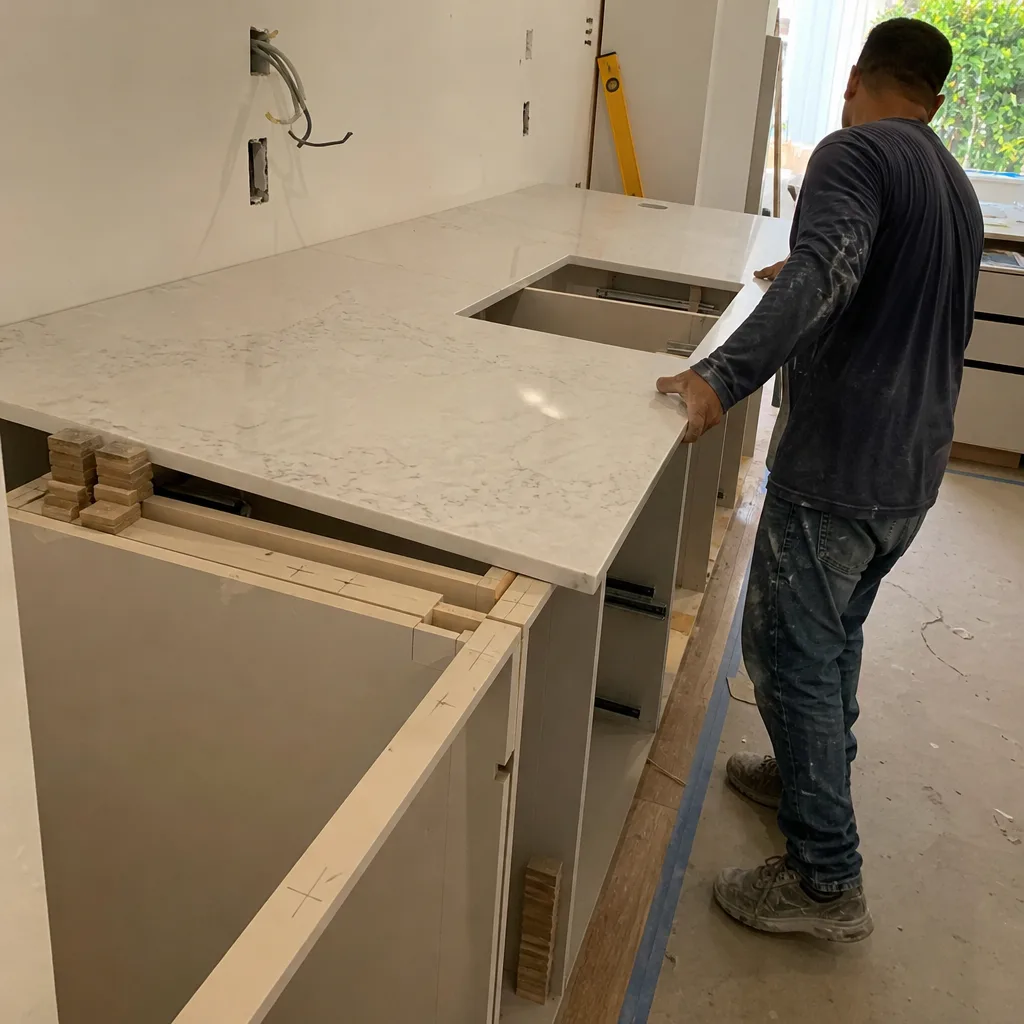
Notice where the real cost difference lives. It isn’t the tile price versus the plank price on the box. It’s the substrate prep. A wet or uneven coral rock subfloor needs a Schluter uncoupling membrane or a self-leveling underlayment before a single tile goes down. Skipping that step is exactly why old tile jobs crack across the grout lines two summers later. We use Quikrete and Sakrete self-leveling products where the deck calls for it, and that prep work belongs in the written price before work starts, not as a surprise add-on after the old floor is ripped out.
How Much Does a Kitchen Floor Add to a Remodel in Miami Beach?
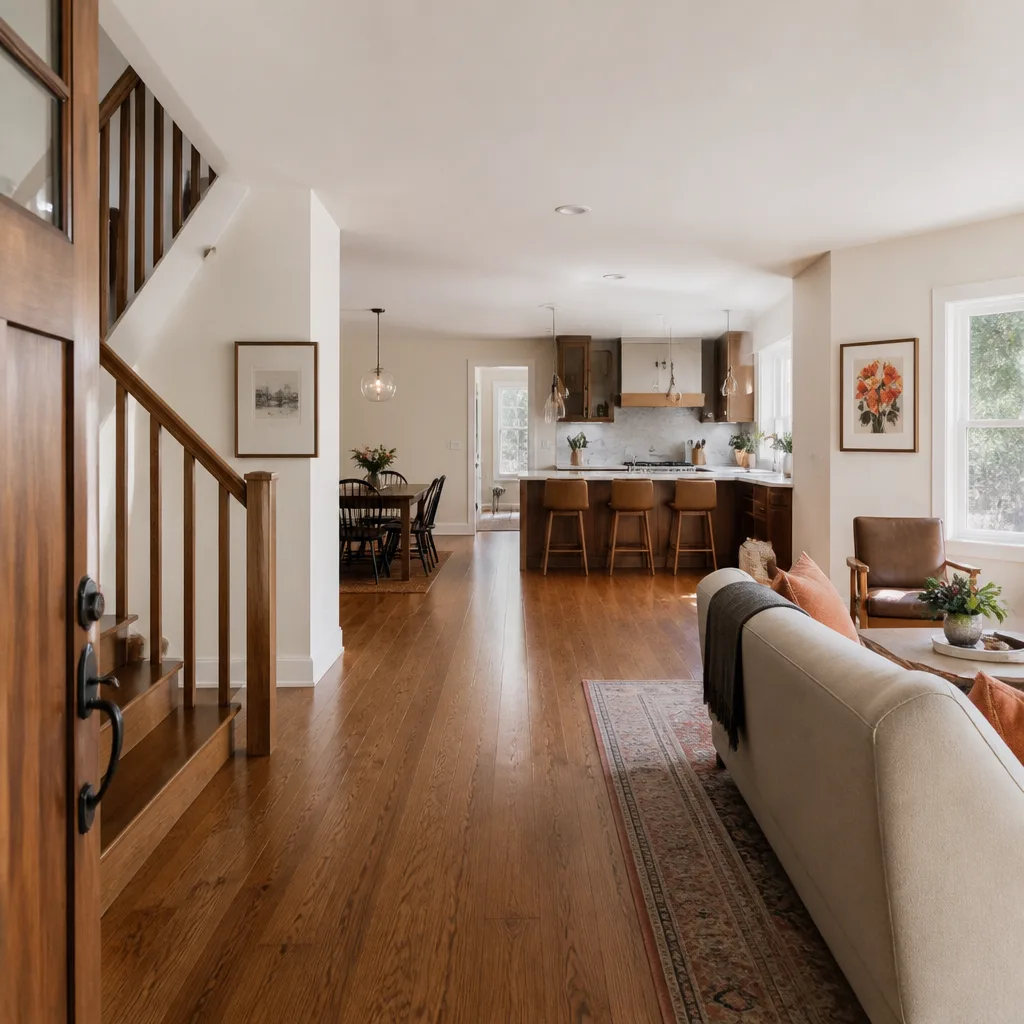
Flooring is one line of a larger number, so it helps to see the whole picture. A full kitchen remodel in Miami Beach runs $16,520-$53,100 depending on layout, cabinet line, and countertop material. A small kitchen remodel lands between $10,620 and $23,600. Your floor sits inside that budget, and the substrate inspection finding is what determines whether it stays on the low end or climbs.
Here’s how the individual pieces typically break out when you’re pricing the job:
- Full kitchen remodel: $16,520-$53,100 (flooring, cabinets, counters, and labor inside this figure)
- Small kitchen remodel: $10,620-$23,600
- Cabinet installation: $4,720-$15,340
- Countertop installation: $2,360-$7,670
- Kitchen island installation: $3,540-$11,800
- Backsplash installation: $945-$2,950
What drives the number up on a Miami Beach floor? Substrate condition, access (condo elevator and COI paperwork add time), and the choice between a basic ceramic and a rectified porcelain. We source tile and setting materials through Oldcastle and Quikrete where the spec allows, and we put the substrate finding in writing on Day 1 so the invoice matches what you were told. That’s the Kingswell Way in practice: say the price before the work, show up in the window we gave, leave the place cleaner than we found it.
What Happens When the Old Floor Comes Up?
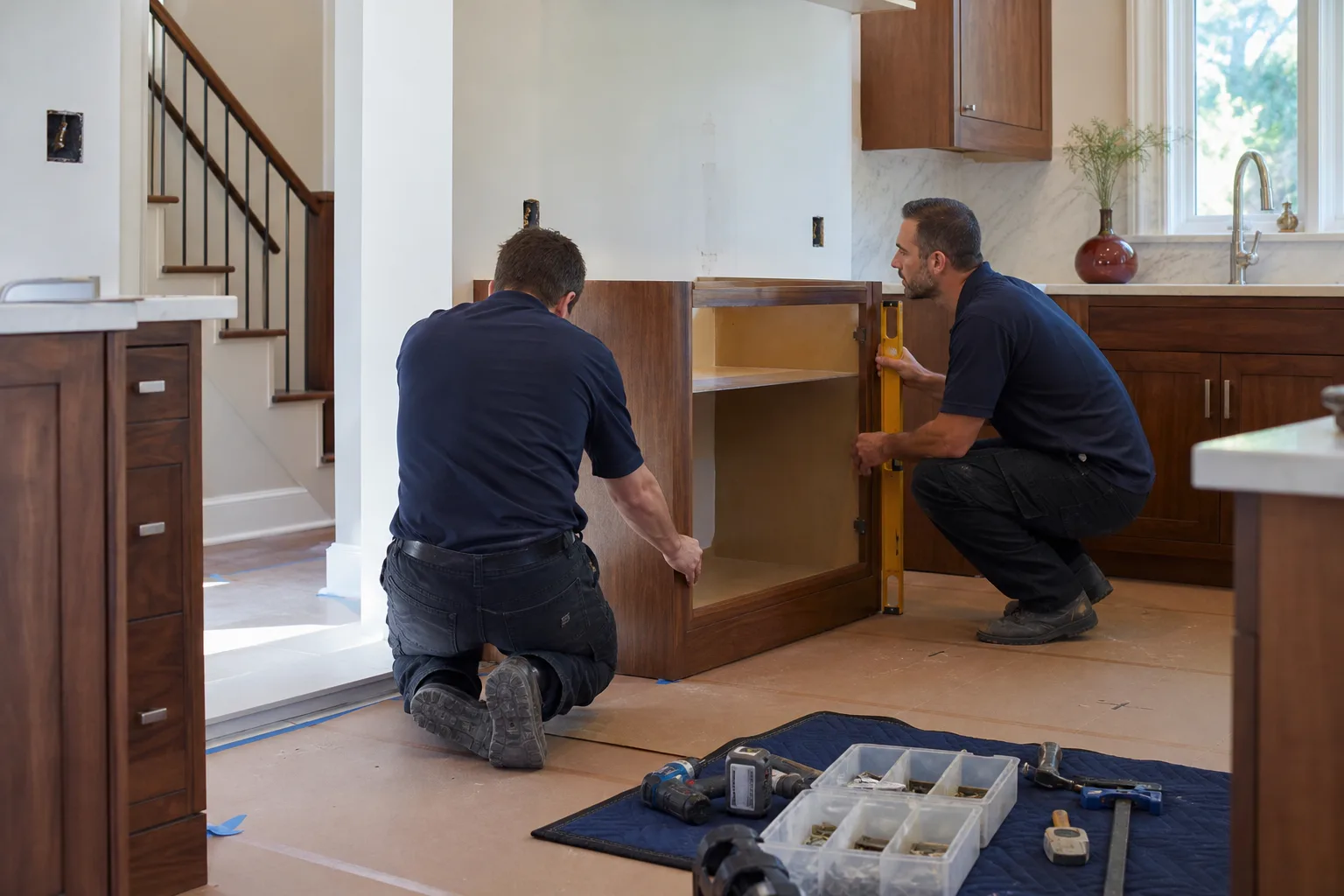
We inspect. Every kitchen floor project starts with a substrate assessment, and on Miami Beach that means checking for moisture content, flatness, and any soft spots in older Dade County pine. If the deck fails a moisture test, we tell you before the tile goes down, not after. If your upper-floor condo passes on paper, we still want the test result on record before we recommend LVP.
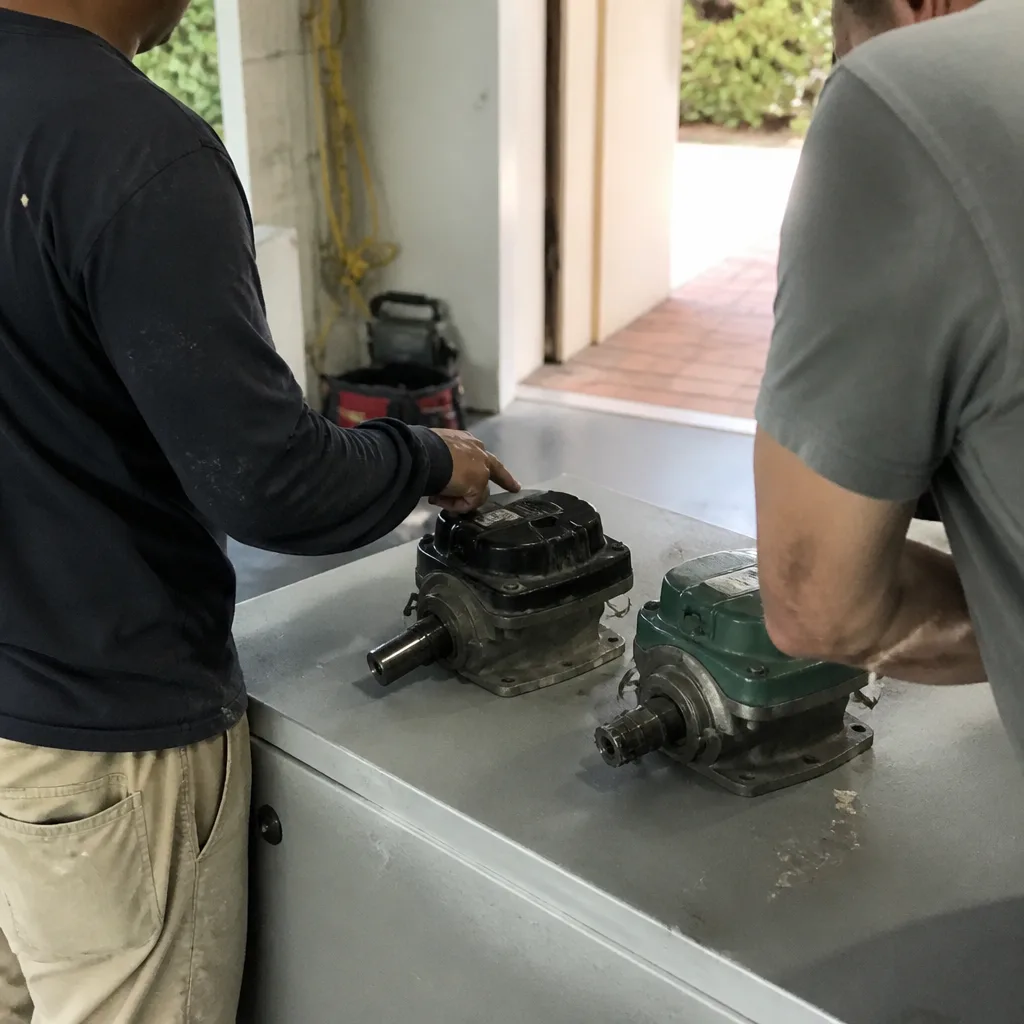
Then we prep and set. On ground-floor coral rock, that usually means an uncoupling membrane or self-leveling underlayment, then rectified porcelain with epoxy grout. On a dry upper-floor concrete deck, it may mean a sound underlayment and a quality SPC plank. Either way, every job gets background-checked, uniformed technicians, a written price up front, and our 365-Day Done Right Promise: if the work fails inside the guarantee period, we come back and fix it at no charge. Our technicians have up to 22 years of experience reading floors that look fine and aren’t.
Do You Need Tile or Vinyl Plank in a Miami Beach Condo Kitchen?
Most upper-floor condo kitchens in Miami Beach are fine with vinyl plank, provided the concrete deck underneath is fully dry and a moisture test is on record. Condo associations often require sound-rated underlayment, and LVP is easier to fit to that requirement than tile. But if the unit sits on the ground floor, or the building predates 1950 with original coral rock and pine framing, tile is the safer long-term bet. We’ve walked into plenty of beachfront condos where the plank looked great in year one and lifted at the seams by year three, and the cause was always underneath.
Where tile wins in a ground-floor Miami Beach kitchen, it wins clearly. Porcelain with epoxy grout doesn’t care about vapor rising from the limestone. There’s no threshold for humidity to push against, no core to swell, no click joint to cup. If you’re remodeling the whole space, our guide to Kitchen Remodeling in Miami Beach covers how flooring decisions fit into cabinet and countertop layout.
Frequently Asked Questions
Tile is better for a ground-floor Miami Beach kitchen because it’s unaffected by moisture vapor rising from coral rock and old pine subfloors, while even WPC and SPC vinyl plank has a manufacturer moisture threshold that sustained humidity can push against. Vinyl plank works well on upper-floor or condo kitchens with a dry, tested concrete deck. Call (844) 656-1986 for a free estimate and we’ll tell you which situation you’re in.
Tile flooring for a Miami Beach kitchen typically falls within a full remodel range of $16,520-$53,100 or a small remodel of $10,620-$23,600, and substrate prep is the biggest variable. A wet or uneven coral rock subfloor needing an uncoupling membrane or self-leveling underlayment adds cost, and we include that prep in the written number before work starts. Call (844) 656-1986 for an exact quote – estimates are free.
In most cases, yes. We schedule free on-site assessments and can often get out same day depending on the current calendar, and a live person answers our phone 24/7, so you’re never stuck in a voicemail maze. Call (844) 656-1986 and we’ll give you a real arrival window, not a maybe.
Vinyl plank fails in older Miami Beach buildings because moisture vapor rises continuously out of coral rock and Dade County pine subfloors in 1920s-1940s structures, and that vapor reaches the locked core from underneath. The click joints cup and lift even when the top of the floor looks dry. A moisture test on record before installation tells you whether plank is safe in a given room. For the full remodeling picture, start with our home page.
If you’d rather have it looked at, Penhallow Remodeling Miami Beach offers a no-pressure assessment in Miami Beach. We’ll inspect the substrate, write the price, and explain the guarantee before anyone picks up a trowel. Call (844) 656-1986 for a free estimate.
Written by the team at Penhallow Remodeling Miami Beach, serving Miami Beach, FL.