Last updated November 18, 2026








Free written scope consultation - allowances, timeline, and change-order rules on paper before a single trade is scheduled
Kitchen Remodeling Maintenance Schedule: What to Do and When
Grout in a Miami Beach kitchen that isn’t re-sealed by month 18 doesn’t just look dirty. It absorbs enough humidity to push tiles off the wall within three to five years, and that repair costs more than the original tile job did. Salt air, year-round AC cycling and humidity that sits at 70 percent most of the summer work on a kitchen in ways a maintenance guide written for Ohio never mentions. This schedule covers the first year month by month, the annual rhythms after that, and the written inspection we walk through with homeowners in month 11 of our 365-Day Done Right Promise.
Quick Answer
In Miami Beach, a remodeled kitchen needs three things on a set calendar: stone countertops re-sealed every 12 months, grout inspected every 6 months and re-sealed every 12 to 18 months, and cabinet hardware lubricated with a silicone-based product every 6 months, never WD-40. Cabinet doors typically need hinge adjustment each January when AC runs hardest, and refrigerator coils should be cleaned every 6 months because pet hair and salt-air dust clog them faster here than on the mainland. Everything else – range hood filters, dishwasher seals, caulk lines – follows a quarterly to annual rhythm laid out below.
Styles & brands we work with
- Kitchen remodeling
- Bathroom remodeling
- Home additions & ADU
- Roofing
- Windows & doors
- Driveway & pavers
- Fence
Table of Contents
- Your First-Year Calendar, Month by Month
- Cabinet Hardware and Soft-Close Maintenance in High Humidity
- Stone Countertops, Grout and Caulk: Sealing Timelines That Actually Hold
- Appliance Ventilation and Seal Maintenance Most Homeowners Skip
- What Voids a Cabinet Warranty (and How to Stay Compliant)
- The Month-11 Written Inspection Under Your 365-Day Guarantee
- The Annual Rhythm After Year One
- Neighborhood Notes: South Beach, Mid-Beach and North Beach
Your First-Year Calendar, Month by Month
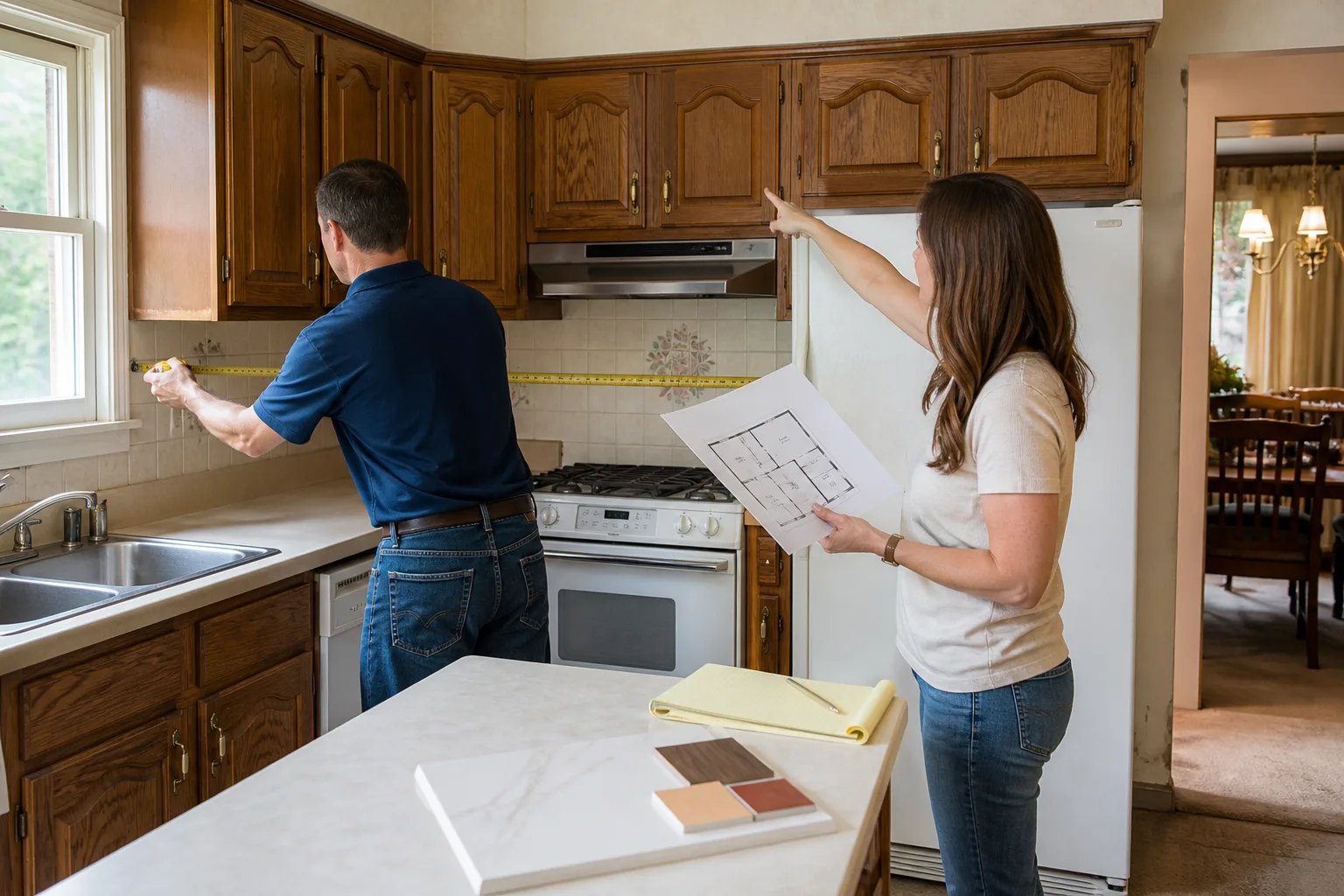
The first year after a kitchen remodel sets the pattern. Components are settling, sealants are curing, and you’re learning how the room behaves in Miami Beach humidity. Here’s the schedule we hand homeowners at project close, whichever cabinet line went in – KraftMaid, Wellborn or another.
- Month 1: Wipe down all cabinet faces with a damp cloth and mild dish soap. Note any door that rubs or doesn’t close flush. Report it. The 365-Day Done Right Promise covers adjustment at no charge.
- Month 2: Check caulk lines at the backsplash and sink. New caulk shrinks slightly as it cures; hairline gaps are normal and get re-caulked once.
- Month 3: First grout inspection. Look for dark or discolored lines, especially near the sink and range. In Miami Beach, seasonal humidity changes show up in grout first.
- Month 4: Clean refrigerator coils for the first time. Then set a 6-month recurring reminder.
- Month 6: Clean the range hood grease filter. Lubricate drawer glides and soft-close hinges with silicone spray.
- Month 9: Inspect dishwasher door seals and the water supply line under the sink. Run a finger along the seal; if it feels stiff or cracked, replace it.
- Month 11: Walk the written inspection checklist with your contractor before the 365-day guarantee period ends.
- Month 12: Re-seal stone countertops and re-seal grout. Set these on an annual calendar.
That’s the year. Most of it takes an afternoon total. The value is in doing it on schedule, not in doing it perfectly.
Cabinet Hardware and Soft-Close Maintenance in High Humidity
Soft-close hinges and drawer glides are the first components to feel Miami Beach humidity. The mechanism inside a soft-close hinge is a small piston filled with damping fluid. In a kitchen where relative humidity swings from 55 percent in January to 80 percent in August, that fluid thickens and thins with the seasons. Doors that closed silently in February start to slam by July.
The fix isn’t more force. It’s lubrication, and the lubricant type matters.
- Use silicone spray or a dry PTFE lubricant. Both are moisture-resistant and don’t attract dust.
- Never use WD-40 on cabinet hardware. Standard WD-40 is a solvent-based product, not a lubricant. It strips the factory grease from hinges and glides and leaves them running dry, which accelerates wear. It also attracts dust that gums up the mechanism.
- Never use cooking spray or olive oil. Both go rancid and turn sticky in heat. We’ve seen this more than once.
- Lubricate every 6 months – spring and fall. A two-second spray on each hinge and glide is enough.
Hinge adjustment is a separate task. Cabinet doors expand and contract with humidity, and the AC runs hardest in January when doors are closed and the air is dry inside. That’s when we recommend checking every door: open each one, listen for rubbing, and tighten the adjustment screws with a Phillips head. A door that rubs against a neighbor is usually a quarter-turn away from sitting right. If a hinge has failed outright within the first year, the guarantee covers replacement.
Stone Countertops, Grout and Caulk: Sealing Timelines That Actually Hold
Countertop sealing schedules published by manufacturers assume a dry climate. In Miami Beach, the timeline tightens. Here’s what we tell homeowners after installing Cambria quartz, Silestone, Caesarstone or a natural stone.
- Quartz (Cambria, Silestone, Caesarstone): These are non-porous engineered surfaces and don’t need annual sealing. They do need a yearly deep clean with a pH-neutral cleaner. Avoid bleach and abrasive pads, which dull the finish. Cambria carries its own manufacturer warranty alongside ours, so read the care guide that comes with the slab.
- Natural stone (granite, marble, quartzite): Re-seal every 12 months. In a Miami Beach kitchen with an open-plan layout and no exhaust hood, we’ve seen granite need re-sealing every 9 months because cooking steam and humidity work on the surface faster.
- Grout: Inspect every 6 months, re-seal every 12 to 18 months. Grout is porous. In a humid climate, an unsealed grout line absorbs moisture from the air and from splashes at the sink. That moisture travels behind the tile and eventually loosens the bond. The scenario in our opening – tiles popping off within three to five years – is a real one we’ve repaired.
- Caulk at backsplash and sink: Inspect every 6 months, replace every 2 to 3 years. Silicone caulk in a humid environment collects mildew along the edge. If you see black flecks that don’t wipe off, it’s time to cut it out and re-caulk.
The test for whether a stone countertop needs re-sealing: put a few drops of water on the surface and leave them for 15 minutes. If the water beads up, the seal is holding. If it darkens the stone or soaks in, re-seal.
If you’re still planning the remodel and haven’t chosen surfaces yet, our guide to Kitchen Remodeling in Miami Beach covers material choices and what holds up in this climate.
Appliance Ventilation and Seal Maintenance Most Homeowners Skip
Three appliance tasks get skipped in most kitchens. Each one has an outsized effect in Miami Beach because the climate stresses the components.
Refrigerator coils
Clean coils every 6 months, not yearly. Coils clog with dust, pet hair and the fine salt-air grit that drifts in through door openings. A clogged coil makes the compressor work harder, which shortens its life. On a Miami Beach kitchen with an open floor plan, the refrigerator is often the loudest appliance in the room; a clean coil quiets it. Pull the fridge out, vacuum the coils with a brush attachment, and slide it back.
Range hood grease filter
Clean the grease filter every 2 to 3 months if you cook most nights, every 6 months if you don’t. Most filters are dishwasher-safe; check the label. Grease buildup in a filter reduces airflow and pushes cooking moisture and odors back into the room, which is exactly what you don’t want in a humid climate. If the hood has a charcoal filter for recirculating mode, replace it every 6 months; charcoal can’t be washed.
Dishwasher seals
Inspect the door gasket every 6 months. Run a damp cloth along the seal and look for cracks, stiffness or black buildup. A failing seal leaks water onto the floor and, over time, into the cabinet substrate – the moisture-resistant layer behind your cabinetry. That’s a repair that runs into the thousands. A replacement gasket is cheap and takes minutes. Also check the water supply line under the sink once a year; braided stainless lines last far longer than the old rubber ones, but they can still develop pinhole leaks.
What Voids a Cabinet Warranty (and How to Stay Compliant)
Cabinet manufacturers publish care guides, and stepping outside them voids the warranty. In Miami Beach, one mistake comes up more than any other: running a steam cleaner near cabinet faces.
Steam cleaners force hot moisture into the wood, MDF and finish. Over time, that moisture swells the substrate, lifts the finish and warps the door. Manufacturers consider it misuse, and they won’t cover the damage. The same goes for pressure washers, which we’ve seen used on outdoor-adjacent cabinetry more than once. Use a damp cloth and mild soap. That’s it.
Other warranty-voiding moves we see:
- Using abrasive cleaners or scouring pads on cabinet faces. They scratch the finish, and scratches aren’t covered.
- Hanging heavy items from cabinet doors or mounting a microwave bracket to a cabinet side not rated for the load. The hinge and frame damage that follows is excluded.
- Ignoring a leaking appliance. Water damage from a failed dishwasher seal is a maintenance issue, not a manufacturing defect. Fix the seal early and the cabinet warranty stays intact.
- Painting or refinishing a cabinet within the warranty period without checking the care guide first. Some finishes can be recoated; others can’t.
If you’re unsure what your cabinet warranty covers, pull out the care guide that came with the installation. If you can’t find it, call us. We’ll tell you what line went in and what the manufacturer expects. We install KraftMaid and Wellborn cabinetry, and both publish clear care guides.
The Month-11 Written Inspection Under Your 365-Day Guarantee
Every Penhallow project is covered by the 365-Day Done Right Promise: if the work fails inside the guarantee period, we come back and fix it at no charge. That guarantee is only as good as the inspection that reviews it. In month 11, before the period closes, walk the kitchen with your contractor and go through a written checklist.
- Open and close every door and drawer. Note any that rub, stick or fail to soft-close.
- Check the caulk and grout lines at the backsplash, sink and floor. Note any cracks, gaps or discoloration.
- Run water in the sink and watch underneath for drips at the supply lines and drain connections.
- Test the range hood on every speed. Listen for rattles; check that the filter seats properly.
- Inspect the countertop seams for separation or darkening.
- Check cabinet hinges and glides for loose screws or wobble.
- Note anything that looks wrong, however minor. This is the time to raise it – not after the guarantee closes.
A written inspection is the whole point. Verbal “looks good” inspections don’t protect anyone. If something needs fixing, we schedule it. If nothing does, you get a written record that the kitchen passed. We also cover the return visit – if a repair fails, there’s no service call fee and no re-inspection charge.
This is part of how we work: say the price before the work, show up in the window we gave you, and leave the place cleaner than we found it. That’s Penhallow Remodeling Miami Beach home in practice.
The Annual Rhythm After Year One
Once the first year is behind you, maintenance settles into a calendar. Post it inside a cabinet door. Here’s the schedule we recommend for a Miami Beach kitchen.
- January: Hinge and glide adjustment. AC runs hardest; doors are driest; check every door for rubbing.
- Every 3 months: Range hood grease filter cleaning. Caulk inspection at sink and backsplash.
- Every 6 months: Silicone spray on all hinges and glides. Refrigerator coil cleaning. Dishwasher seal inspection. Grout inspection.
- Every 12 months: Re-seal natural stone counters. Deep clean quartz counters. Re-seal grout (or every 18 months if grout sees low traffic).
- Every 2 to 3 years: Replace silicone caulk at backsplash and sink.
That’s roughly four to six hours of work spread across a year. Compare that to replacing a tile backsplash ($900 to $2,500 in Miami Beach), re-sealing a warped cabinet face (a $200 to $400 repair if the finish fails), or replacing a refrigerator compressor because the coils never got cleaned. Maintenance is cheaper than repair, every time.
The same rhythm applies to bathrooms. Our Bathroom Remodeling in Miami Beach guide covers the seal and grout schedule specific to wet rooms.
Neighborhood Notes: South Beach, Mid-Beach and North Beach
Miami Beach isn’t one climate. A kitchen’s maintenance schedule shifts depending on where the house sits.
In South Beach and Mid-Beach, salt air is the dominant stressor. Homes within a few blocks of the ocean see faster oxidation on metal hardware, hinges and appliance exteriors. We recommend wiping cabinet hardware with a dry cloth weekly and applying silicone spray to hinges every 4 months rather than 6. Stainless appliance exteriors benefit from a light coat of mineral oil every 6 months. Any counters with natural stone should be re-sealed every 9 months instead of 12, because salt air accelerates the breakdown of sealants.
North Beach and the Collins Avenue corridor sit a bit further from the break, but the older building stock means more kitchens sit behind original windows with less air sealing. That means interior humidity runs higher and more constant. Grout and caulk checks every 4 months instead of 6 catch trouble sooner. If you’re in a mid-century building where the AC unit is older, refrigerator coil cleaning matters even more.
If you’re considering a remodel in any of these neighborhoods, our General Contractor in Miami Beach page covers what to expect on permits and inspections. For a broader view of how we handle the whole house, our team works across kitchen, bath and whole-home projects.
Common Mistakes to Avoid
- Using WD-40 on cabinet hardware. It’s a solvent, not a lubricant. It strips factory grease and leaves hinges and glides running dry. Use silicone spray or dry PTFE.
- Skipping grout re-sealing because the tile still looks fine. Grout fails from behind. By the time you see discoloration, moisture is already traveling behind the tile. Seal on a calendar, not on appearance.
- Steam-cleaning cabinet faces. This is the most common warranty-void in Miami Beach kitchens. Steam forces moisture into the substrate and lifts the finish. Damp cloth, mild soap.
- Cleaning refrigerator coils once a year. In a humid, salt-air climate with pet hair, 6 months is the interval. Yearly is too late; the compressor is already working harder.
- Running the range hood only for heavy cooking. Every meal adds moisture to the air. Run the hood for every cook session and give it 10 minutes after you finish to clear the room.
- Waiting until the guarantee period has expired to raise a concern. The month-11 inspection exists for a reason. Raise it before the 365 days close.
- Replacing a soft-close hinge yourself when a warranty covers it. If a hinge fails within the first year, call us. Replacement is covered, and using the wrong replacement part can void the cabinet warranty.
See the difference
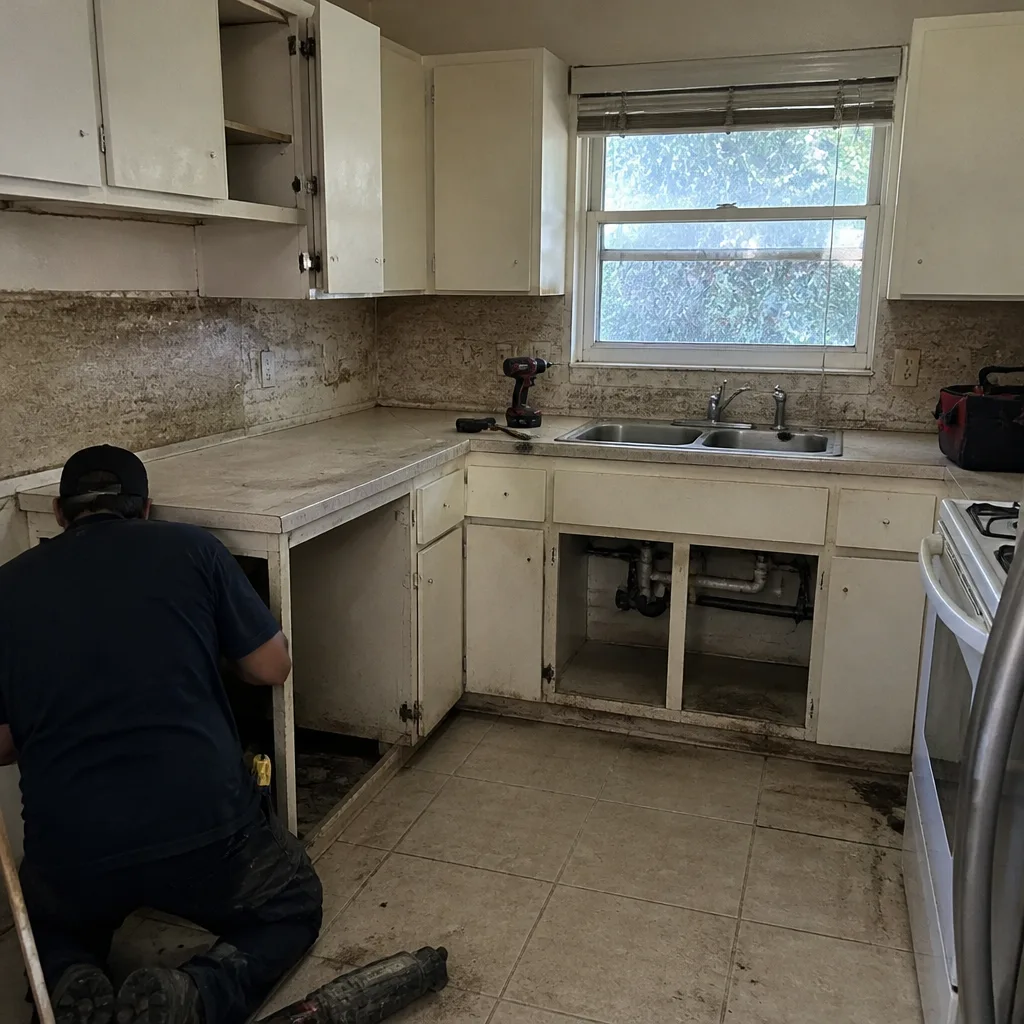 Before
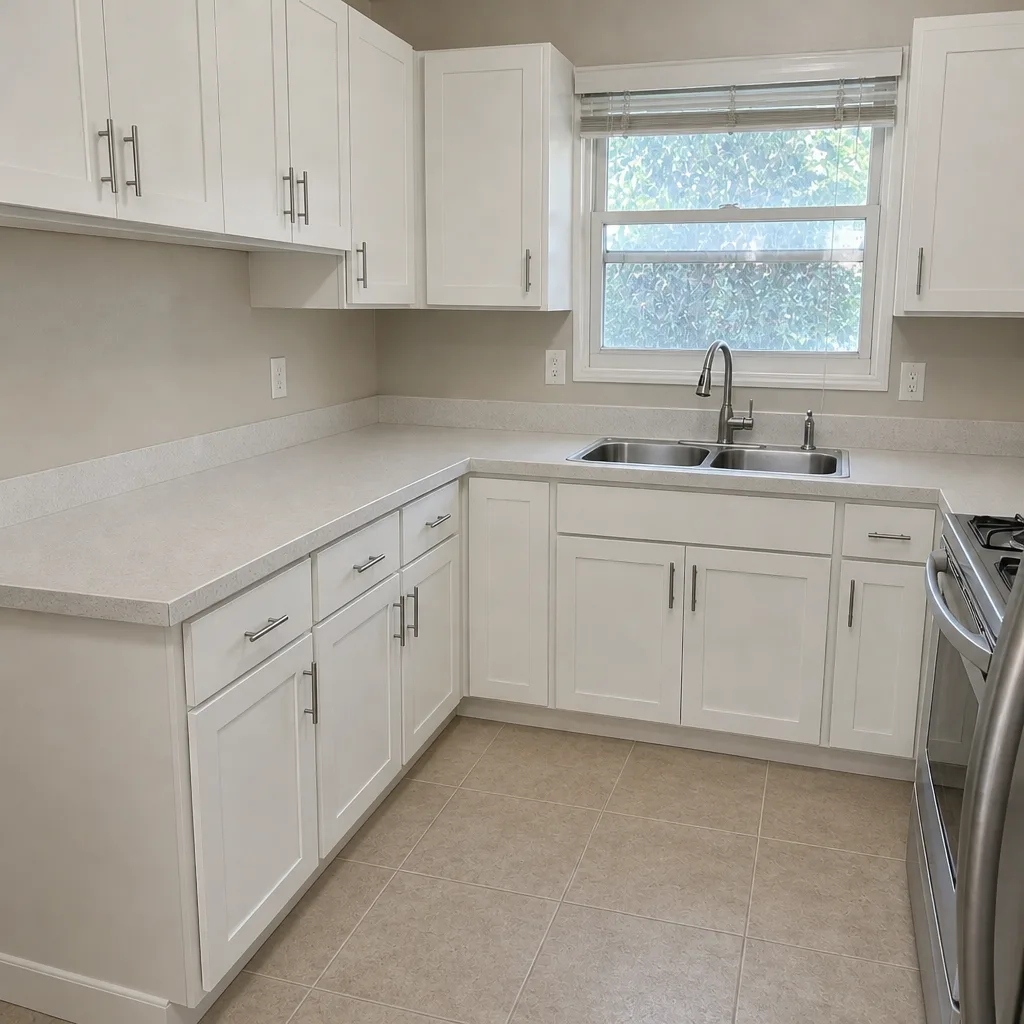 After
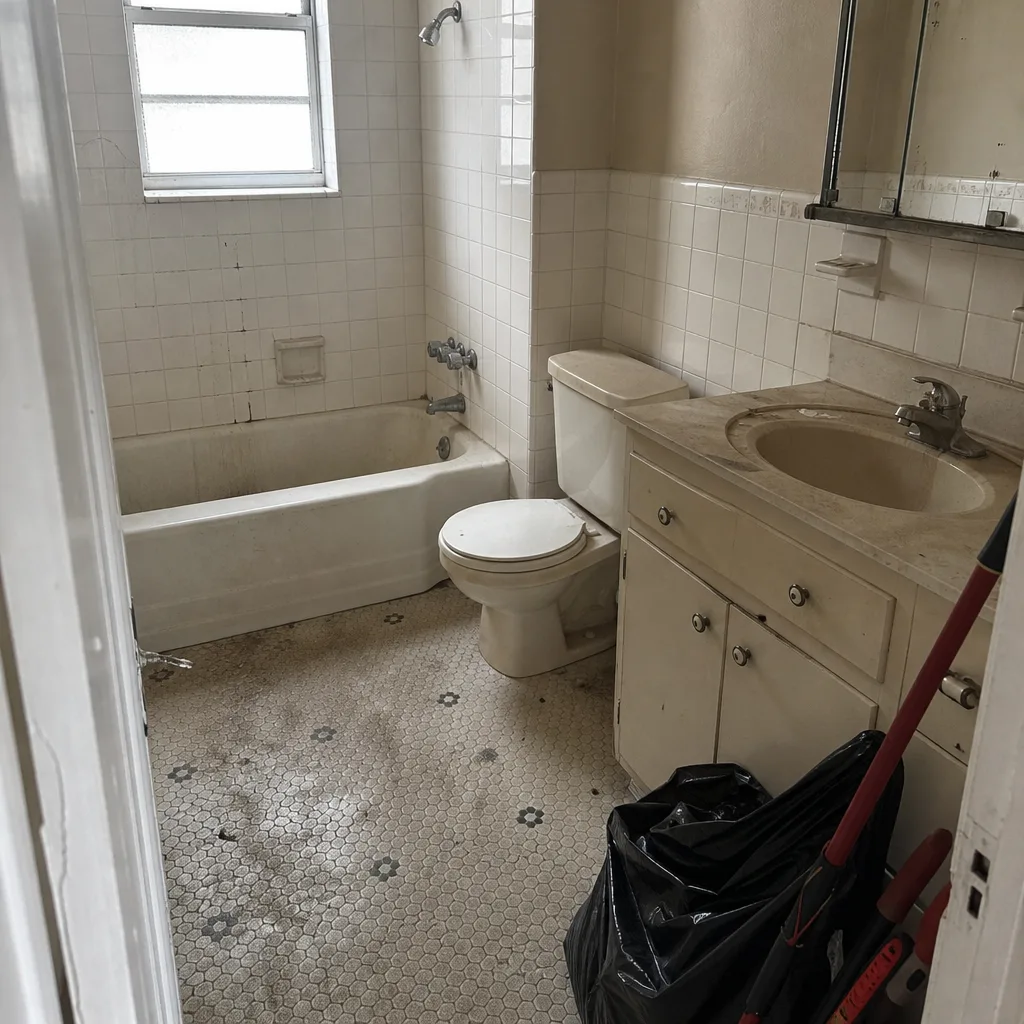 Before
 After
 Before
 After
When to Call a Professional
Most of the schedule above is homeowner work. A few situations need a professional.
Call us when a cabinet hinge or glide fails within the first year, when tiles loosen or grout won’t hold a seal after two attempts, when water appears under the sink and you can’t trace it, when the range hood stops pulling air even after a filter cleaning, or when a cabinet face warps or the finish lifts. These are the failures that, left alone, escalate from a maintenance item to a repair that runs into the thousands.
Penhallow Remodeling Miami Beach offers free estimates in Miami Beach. Every project comes with a written price before work starts, a defined arrival window, background-checked technicians in uniform, and the 365-Day Done Right Promise in writing. Call (844) 656-1986 to schedule your free estimate. A live person answers around the clock.
Frequently Asked Questions

Every 12 to 18 months, with an inspection every 6 months. In South Beach and Mid-Beach, where salt air accelerates sealant breakdown, we recommend re-sealing every 12 months on the dot. Grout in a humid kitchen absorbs moisture from the air and from splashes; once the seal fails, moisture travels behind the tile. Call (844) 656-1986 for a free inspection if you’re not sure where your grout stands.
Silicone spray or a dry PTFE lubricant. Never WD-40, which is a solvent that strips factory grease, and never cooking oil, which goes rancid. Apply every 6 months, or every 4 months in beach-adjacent neighborhoods. Call (844) 656-1986 if a hinge has failed outright within the first year; replacement is covered under our 365-Day Done Right Promise.
Every 6 months. The combination of humidity, salt-air grit and pet hair clogs coils faster here than in dry climates. A clogged coil makes the compressor work harder and shortens its life. Pull the fridge out, vacuum the coils with a brush attachment, and set a recurring reminder. Call (844) 656-1986 for a free estimate if you’re planning a kitchen remodel and want to build the schedule into the design.
No. Cambria, Silestone and Caesarstone quartz are non-porous engineered surfaces and don’t require sealing. They need a yearly deep clean with a pH-neutral cleaner and should never be scrubbed with abrasive pads. Natural stone – granite, marble, quartzite – is different: re-seal every 12 months, or every 9 months in salt-air neighborhoods. Call (844) 656-1986 for a free estimate if you’re choosing between materials.
Steam cleaning near cabinet faces is the most common cause here. Steam forces moisture into the substrate, swells it and lifts the finish, and manufacturers count it as misuse. Abrasive cleaners, hanging heavy items from doors, and ignoring a leaking appliance are also common voids. Stick to a damp cloth and mild soap, and address leaks early. Call (844) 656-1986 if you’re unsure what your cabinet warranty covers.
Walk the kitchen with your contractor and a written checklist. Open and close every door and drawer, check caulk and grout lines, run the sink and watch underneath, test the range hood, inspect countertop seams, and note anything that looks wrong – however minor. A written inspection is the point; verbal “looks good” doesn’t protect anyone. Call (844) 656-1986 to schedule yours before the 365 days close.
The Bottom Line
A Miami Beach kitchen ages on a different clock than one in a dry climate. Humidity, AC cycling and salt air make the sealing, lubrication and appliance-cleaning schedule tighter than national maintenance guides assume. The core calendar: re-seal stone counters yearly, inspect grout every 6 months and re-seal every 12 to 18 months, lubricate hinges and glides with silicone every 6 months, clean refrigerator coils twice a year, and complete the month-11 written inspection before your 365-day guarantee closes. Post it inside a cabinet door, set reminders, and the kitchen holds up. Skip it, and the repairs cost more than the maintenance ever would.
Written by the team at Penhallow Remodeling Miami Beach.